


Minor vehicle damage creates hesitation for most owners. A small dent from a shopping cart or a scratch from tight parking at the office seems manageable at first. Many drivers convince themselves that the damage isn't serious enough to warrant professional attention, postponing repairs indefinitely rather than taking action.
Uncertainty about repair processes, timelines, and outcomes delays necessary action. Questions about whether damage truly requires professional intervention or might be something manageable with DIY solutions create paralysis. Meanwhile, seemingly minor issues quietly worsen as surface damage deepens and spreads to surrounding areas.
Understanding repair options early transforms uncertainty into informed decisions. Knowledge about how minor repairs progress, such as door dings spreading rust, or scratches exposing bare metal, removes barriers preventing vehicle owners from taking action. At Tom Wood Collision Center, we help Indianapolis-area drivers navigate these concerns through transparent evaluations and manufacturer-certified repair processes. Early intervention with professional auto body repair prevents minor issues from becoming expensive problems requiring extensive restoration work.
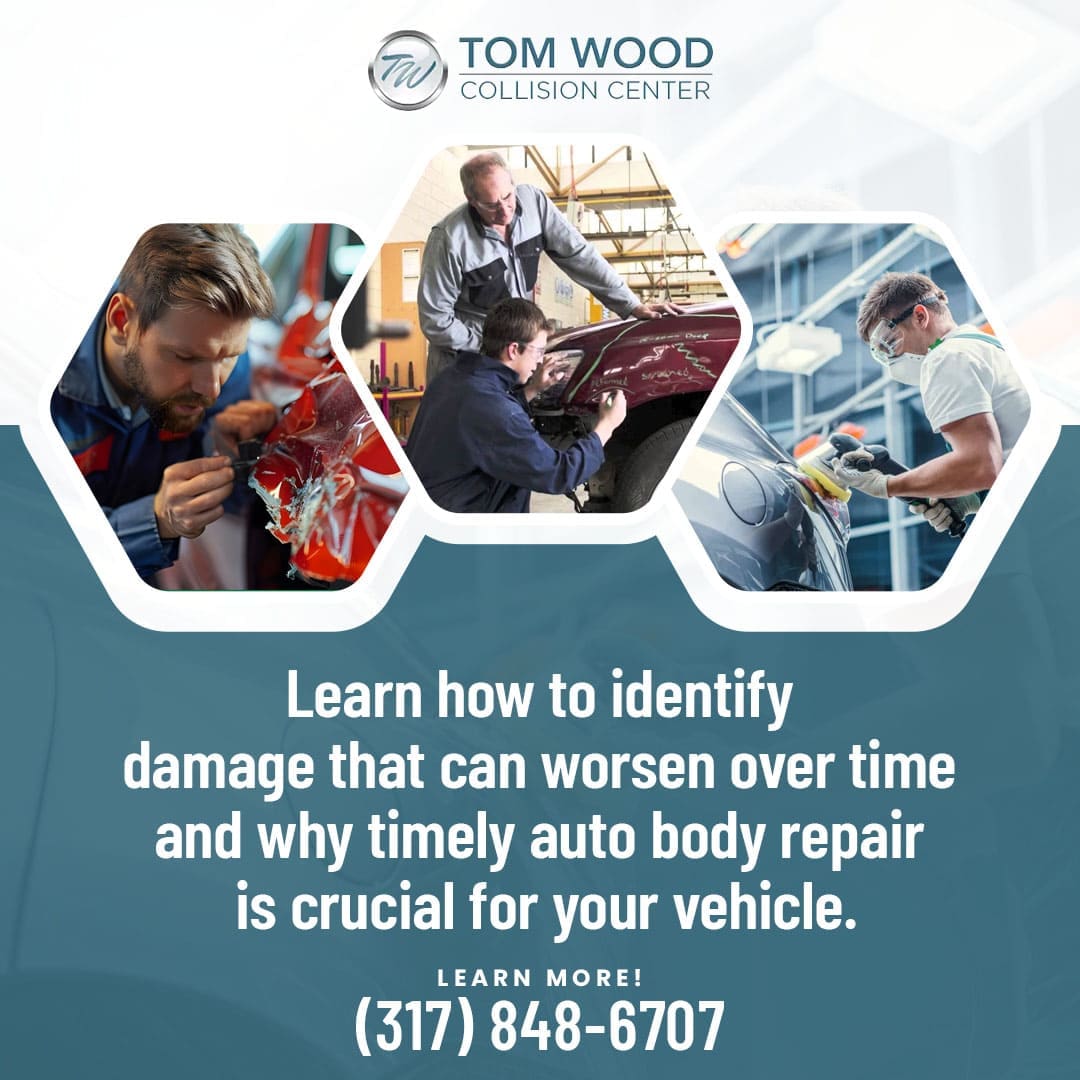
Recognizing When Auto Body Damage Needs Attention
Vehicle damage reveals itself through specific warning signs that indicate professional attention is needed. Understanding these signals helps owners distinguish between cosmetic concerns and issues requiring repair.
-
Panel deformations signal structural damage requiring evaluation. Shallow depressions in doors, fenders, or quarter panels indicate metal has been pushed out of its original shape. Door dings from adjacent vehicles create localized metal deformation that can stress paint coatings and affect panel appearance if left unaddressed. These dents may appear minor, but they affect how panels fit together and function over time.
-
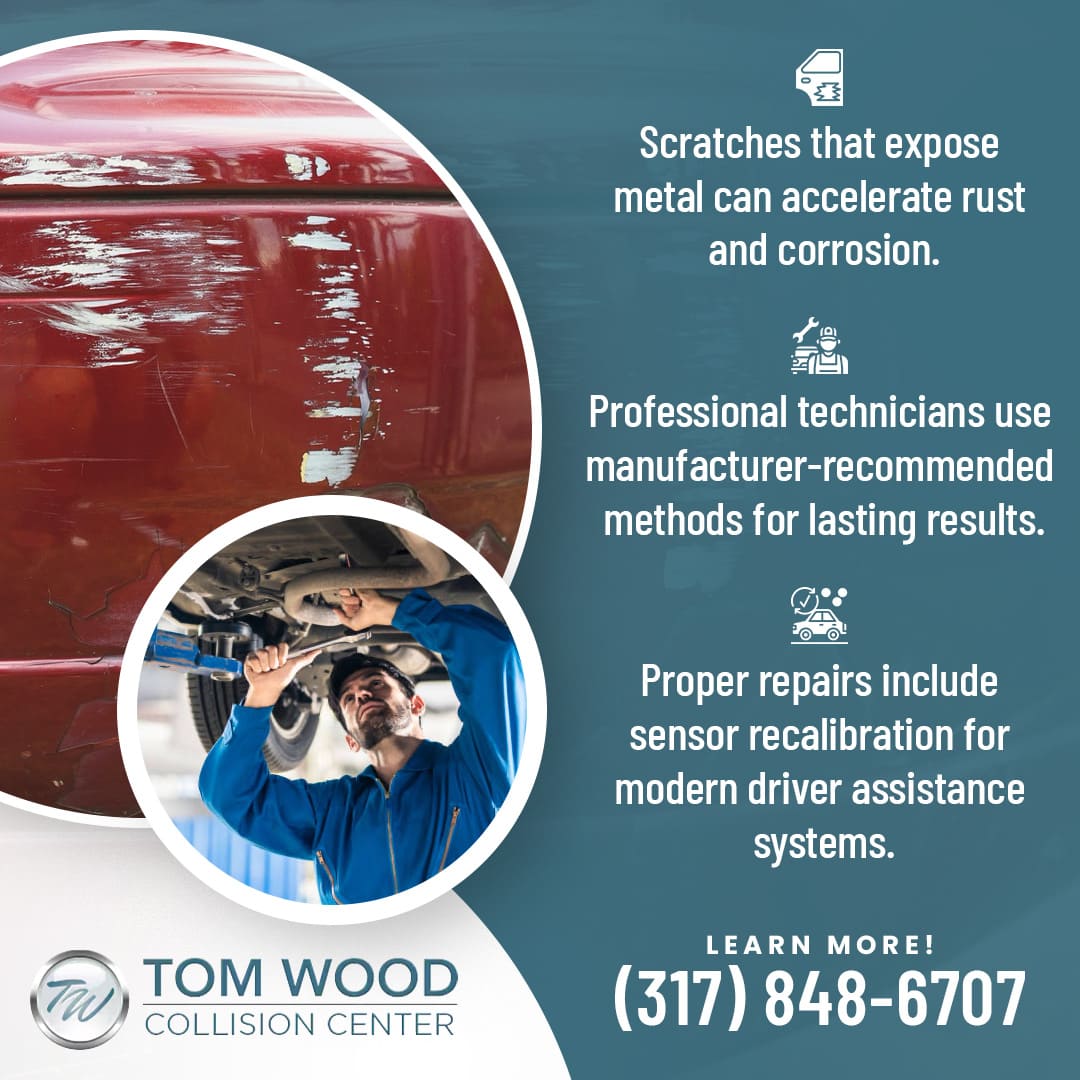
Surface scratches vary in severity based on depth. Light marks that don't catch your fingernail typically remain in the clear coat layer. Deeper scratches showing white or gray lines have penetrated to the base paint or primer. The deepest scratches expose bare metal, creating immediate rust risks that spread quickly in Indianapolis weather conditions.
-
Paint damage accelerates when left untreated. Small chips allow moisture penetration behind the surrounding paint. Cracked or flaking paint around dents indicates stress that will worsen with temperature changes. Any damage exposing metal underneath demands prompt attention before corrosion begins.
Everyday Wear Versus Repair Territory
Normal wear from regular vehicle use differs from damage requiring professional intervention. Fine swirl marks from car washes represent typical wear. Light surface oxidation on older vehicles reflects natural aging. These conditions affect appearance without threatening structural integrity.
Damage crosses into repair territory when protective barriers fail.
-
A common guideline is that scratches that catch a fingernail may have penetrated beyond the clear coat, though professional evaluation is required to confirm depth and repair needs.
-
Dents accompanied by paint cracking indicate metal stress.
-
Exposed metal from chips or deep scratches creates corrosion entry points requiring immediate sealing.
Indianapolis weather accelerates damage progression once paint protection fails. Winter road salt and moisture can significantly accelerate corrosion on exposed metal, allowing rust to develop more quickly than in dry conditions. Summer humidity expands small failures into larger affected areas. Finding reliable auto body repair near you and addressing damage promptly prevents minor issues from becoming extensive restoration projects.
Understanding Which Repairs Should Come First
Professionals prioritize repairs based on progression risk rather than damage visibility. A small hidden chip on a rocker panel exposing bare metal needs more urgent attention than a visible but surface-level door ding. Experienced technicians assess damage depth, location, and environmental exposure when recommending repair sequences. Consulting with an auto body repair shop helps determine which issues demand immediate attention versus those allowing flexible scheduling.
How Professional Auto Body Repair Solves These Problems
Professional auto body repair near you delivers solutions through systematic evaluation and matched repair techniques. Technicians begin by documenting all damage, including issues not immediately visible that could affect repair quality or vehicle safety. This comprehensive assessment prevents overlooked problems that require subsequent shop visits.
Modern repair facilities use specialized equipment that determines proper correction methods:
-
Digital measuring systems verify frame dimensions and panel alignment, ensuring structural accuracy after impact repairs.
-
Welding equipment specific to vehicle materials handles aluminum, high-strength steel, and standard steel using manufacturer-approved techniques.
-
Climate-controlled spray booth maintains the temperature and humidity levels necessary for proper paint adhesion and curing.
-
ADAS calibration tools restore advanced safety system functionality after repairs affecting sensor positions or mounting points.
Repair quality depends on matching techniques to damage complexity. Simple repairs receive straightforward solutions while complicated damage gets comprehensive treatment. A technician might combine multiple approaches on a single panel when damage involves both metal deformation and coating failure, addressing all aspects systematically.
Vehicle construction differences require adapted methods. Unibody designs demand different structural repair approaches than body-on-frame construction. Vehicles using mixed materials, such as aluminum hoods on steel bodies, need material-specific welding procedures and corrosion prevention between dissimilar metals. An experienced auto body repair shop maintains capabilities for diverse vehicle architectures and materials.
Preventing Complications Through Proper Methods
Professional methodology prevents common repair failures that create recurring problems. Improper metal straightening leaves stress concentrations that crack paint months later. Incomplete rust removal allows hidden corrosion to continue beneath new finishes. Rushed paint application traps moisture, causing blistering and delamination.
Quality-focused facilities follow manufacturer repair procedures that specify:
-
Sectioning locations for cutting and replacing damaged structural components.
-
Welding parameters, including amperage, wire speed, and weld spacing, for structural integrity.
-
Adhesive applications for bonded panels requiring specific cure times and surface preparation.
-
Replacement requirements identifying damage severity where repair becomes unsafe compared to part replacement.
These procedures exist because vehicle manufacturers engineer specific repair methods, maintaining crashworthiness and occupant protection. Deviating from specified procedures may produce cosmetically acceptable results while compromising structural performance during subsequent collisions.
Insurance claims benefit from proper documentation practices. Detailed damage reports with photographs support supplement approvals when teardown reveals hidden issues. Repair facilities working directly with insurance companies streamline authorization processes, reducing delays while ensuring complete correction receives coverage.
The Advantage of Choosing Auto Body Repair Near You
Local repair facilities provide easier access to inspections and estimates without extensive travel requirements. Drivers concerned about door dings discovered after shopping trips or scratches from parking garage incidents can schedule evaluations at nearby shops during normal routines. Proximity eliminates barriers preventing damage assessment when uncertainty exists about the repair necessity.
Geographic convenience supports clear communication throughout repair processes. Local shops enable in-person discussions about repair options, damage extent, and recommended approaches. Seeing damaged areas while talking with technicians provides context that phone conversations and photo exchanges cannot replicate.
Building Relationships With Trusted Professionals
Repeat interactions with local facilities develop familiarity and trust. Technicians remember previous repairs, understanding vehicle history and owner preferences. This knowledge streamlines future evaluations as professionals recognize patterns and can reference past work when assessing new damage.
Community reputation matters for local businesses in ways distant corporate chains cannot replicate. Indianapolis-area shops build reputations through consistent quality work and customer service within their immediate service areas. Online reviews, word-of-mouth recommendations, and business tenure reflect local performance.
As an established auto body repair shop in Indianapolis, Tom Wood Collision Center serves the metro area with convenient access for customers throughout the region. Our location at 9727 Bauer Dr E provides easy access from major corridors while offering the personalized service that local operations deliver.
Making an Informed Decision About Auto Body Repair
Repair timing considerations balance damage progression risks against scheduling convenience. Professional evaluation provides information needed for informed decisions. Experienced technicians assess damage characteristics, explain progression risks, and help vehicle owners understand urgency levels. This expert perspective clarifies which repairs demand immediate action versus those allowing delayed scheduling.
Shops focusing on long-term results prioritize repair quality over rushed completions. Proper paint curing, thorough surface preparation, and manufacturer-approved procedures require time investments that shortcuts cannot replace. Facilities emphasizing lasting auto body repairs over quick turnarounds deliver better outcomes, supporting vehicle longevity and value retention.
Choosing Quality Over Convenience
Manufacturer certifications indicate commitment to proper repair procedures and ongoing training investments. Vehicles with Advanced Driver Assistance Systems (ADAS) require precise calibration after body repairs, making certified auto body repair shops important for newer vehicles where safety systems depend on exact sensor positioning.
Equipment capabilities affect repair quality and efficiency. Computerized paint mixing systems provide accuracy impossible with manual methods. Frame straightening and measuring equipment ensures structural repairs meet safety specifications. Climate-controlled spray booths maintain conditions necessary for proper paint curing and finish quality.
Tom Wood Collision operates as a fully certified auto body repair shop in Indianapolis with certifications from virtually all major vehicle manufacturers, demonstrating our capability to service diverse vehicle brands properly. Our advanced equipment includes AI-powered inspection systems identifying hidden damage and automated paint mixing technology delivering consistent color matching results.
How Tom Wood Collision Center Addresses Your Common Repair Concerns
When door dings, scratches, and parking lot damage create uncertainty about repair needs, Tom Wood Collision Center provides clarity and solutions:
-
Thorough damage evaluation: Our technicians assess damage under specialized lighting, explaining whether scratches have penetrated to bare metal or if door dings qualify for cost-effective PDR without urgency.
-
Honest urgency assessment: We clarify which damage requires immediate attention to prevent rust formation versus issues allowing flexible scheduling based on your convenience.
-
Matched repair methods: Door dings with intact paint receive PDR treatment, preserving factory finishes, while scratches exposing metal get prompt corrosion prevention before refinishing.
-
Manufacturer-certified expertise: Our certifications across virtually all major vehicle brands ensure proper procedures, whether repairing compact car doors or aluminum truck panels.
-
Insurance coordination: We handle estimate submissions and authorization processes directly with carriers, simplifying claims while keeping you informed throughout repairs.
-
Clear communication: From initial assessment through completion, our team provides realistic timelines and regular updates, eliminating confusion about repair status and progression.
The everyday damage from parking lots and tight spaces doesn't have to become a source of stress when you have a trusted auto body repair shop in Indianapolis. Our approach addresses both visible issues and underlying protection concerns before minor problems escalate into extensive restoration projects.
Turning Uncertainty Into Confident Decisions
Understanding auto body damage characteristics and repair options removes hesitation that prevents timely intervention. Knowledge about how door dings, scratches, and parking lot incidents progress helps vehicle owners recognize when professional attention becomes necessary rather than optional.
Solving auto body issues before they escalate protects vehicle value while preventing minor problems from becoming extensive repairs. Prompt attention to paint damage stops rust formation. Early dent repair maintains panel integrity. Quality refinishing restores protective coatings that environmental exposure constantly challenges. Working with a trusted local auto body repair shop combines convenience with quality outcomes.
When door dings, scratches, or other vehicle damage create concern, Tom Wood Collision provides the expertise and technology your car deserves. Contact us at (317) 848-6707 for professional damage assessment and repair solutions. Our auto body repair shop in Indianapolis serves the metro area with manufacturer-certified repairs, restoring vehicles to proper condition.