


YouTube tutorials make dent removal look simple. Online forums suggest that scratch repair requires only sandpaper and spray paint from the hardware store. The appeal of saving money by handling auto body damage yourself creates temptation for vehicle owners facing minor collision damage or parking lot incidents.
DIY auto body repair attempts frequently create more expensive problems than the original damage. Modern vehicles contain complex safety systems, specialized materials, and precisely engineered structures that require professional equipment and training to repair correctly. What appears as a straightforward cosmetic fix often involves hidden structural damage, safety system calibration needs, or material-specific repair procedures that DIY methods cannot address properly.
Professional auto body repair protects your vehicle's structural integrity, maintains safety system functionality, and preserves resale value through manufacturer-approved procedures. At Tom Wood Collision Center, our technicians frequently address complications from unsuccessful DIY attempts that have transformed straightforward repairs into complex restoration work. Understanding the difference between professional capabilities and DIY limitations helps vehicle owners make informed decisions about protecting their automotive investments.
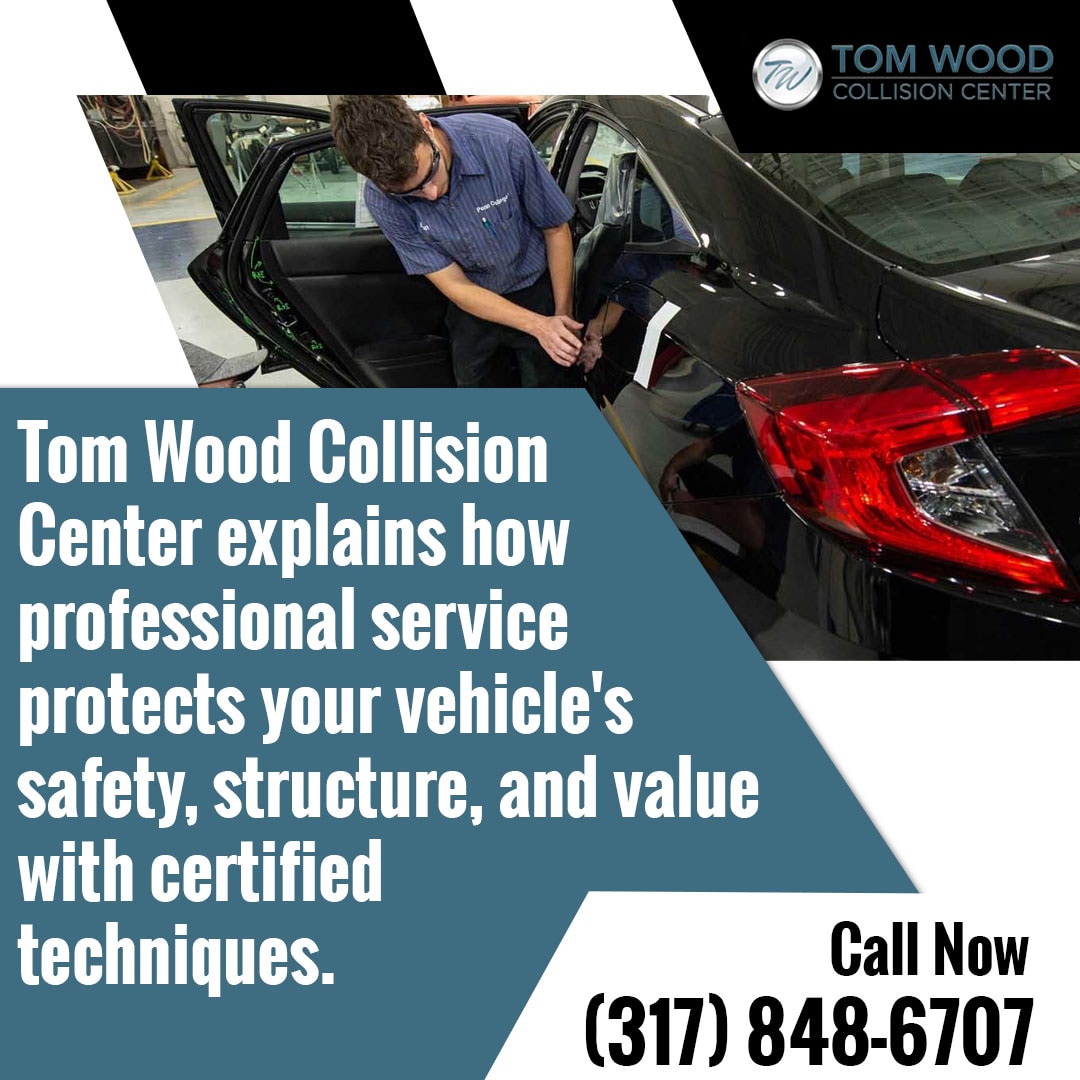
The Hidden Complexity of Modern Vehicle Construction
Advanced materials, integrated safety systems, and computer-controlled components have transformed auto body repair of modern vehicles into technical restoration requiring specialized knowledge, rather than mechanical work.
Modern vehicles use mixed materials, including high-strength steel, aluminum, carbon fiber, and advanced plastics, each demand specific repair procedures. A single vehicle might contain six different steel grades in its structure, each requiring different welding parameters and heat management. Aluminum panels cannot mix with steel fasteners without special corrosion prevention measures. These material combinations create repair complexity invisible to vehicle owners assessing damage.
Paint Technology and Color Matching Challenges
Modern automotive paint systems involve multiple layers with specific chemical compositions and application requirements. Factory finishes include electrocoat primers for corrosion protection, primer surfacers for adhesion, base coats for color, and clear coats for protection and gloss. Each layer requires specific temperature ranges, humidity levels, and flash times between coats that home garages cannot replicate.
Vehicle paint also fades uniquely based on sun exposure, environmental conditions, and time. A five-year-old red vehicle's paint differs from factory specifications due to UV degradation and oxidation. Professional shops use spectrophotometers that analyze paint at the molecular level to create custom formulas matching your vehicle's current color rather than relying on factory codes that don't account for aging. DIY spray cans purchased by paint code produce mismatched repairs that stand out under different lighting conditions.
Understanding Advanced Driver Assistance Systems
Advanced Driver Assistance Systems (ADAS) represent another layer of complexity. ADAS includes features like adaptive cruise control, lane departure warning, automatic emergency braking, and blind spot monitoring that depend on precisely positioned sensors and cameras. Improper ADAS calibration after collision repair can result in these safety systems failing to function correctly during critical moments.
The structural integration of modern vehicles means damage rarely remains isolated to the visible impact area. Force from collisions transfers through frame members, affecting mounting points and structural connections distant from the damaged panel. A rear quarter panel impact might affect trunk floor alignment, rear suspension mounting positions, or even door operation on the opposite side of the vehicle.
Common DIY Failures That Require Professional Correction
Failed DIY repairs create predictable patterns that auto body repair shops encounter regularly. The progression follows familiar stages: initial DIY attempt creates additional damage, requires more extensive professional correction, and adds labor hours for removing improper materials or reversing incorrect procedures.
Paint Adhesion Problems
Paint adhesion problems develop when DIYers skip surface preparation steps. Professional refinishing requires degreasing, sanding to specific grit progression, primer application with proper flash times, and paint application in controlled temperature and humidity conditions. Home garage attempts lack climate control, proper ventilation, and dust-free environments. The resulting paint failures require complete removal and surface re-preparation before correct refinishing.
Improper Filler Application
Body filler requires specific mixing ratios, application thickness limits, and proper surface bonding. Excessive filler thickness cracks under vibration and temperature cycling. Filler applied over rust or contaminated surfaces delaminates within months. Professional correction involves removing all improper filler, addressing underlying corrosion, and restoring proper panel contours through metalwork before applying filler only where appropriate.
Damaged Adjacent Areas
Paint sprayers create overspray on glass, trim, and surrounding panels, requiring professional wet-sanding and buffing for removal. Improper heat application during dent removal warps panels or damages interior components. These complications expand the original repair scope while adding labor hours for damage correction.
Professional Equipment That DIY Methods Cannot Replicate
Auto body repair shops maintain specialized equipment representing substantial capital investment. This equipment performs functions that are impossible to do with consumer tools, creating qualitative differences between professional and DIY repair capabilities.
Computerized Frame Measuring Systems
Computerized frame measuring systems verify structural dimensions to within millimeters across the entire vehicle structure. These systems use multiple reference points to confirm that frame rails, suspension mounting locations, and body panel mounting surfaces align with manufacturer specifications. Frame damage affects vehicle handling, tire wear patterns, and crashworthiness during subsequent collisions.
Tom Wood Collision Center operates the first UVEYE vehicle scanning platform installed in a collision center nationwide. This computer vision technology uses deep-learning algorithms to inspect undercarriage components, producing high-resolution imagery that identifies structural damage, fluid leaks, and component displacement down to millimeter-level accuracy. The detailed documentation supports insurance supplement approvals while identifying hidden damage that visual inspections miss.
Paint Matching Technology
Color matching represents one of the most challenging aspects of refinishing work. Vehicle paint fades over time through UV exposure, oxidation, and environmental contamination. Factory paint also varies between production batches, creating color differences even among vehicles from the same model year.
Professional facilities use spectrophotometers that analyze paint at the molecular level, measuring color values across multiple wavelengths. They create custom paint formulas matching your specific vehicle's current color rather than relying on factory codes that don't account for aging and fading.
Spray booth technology controls temperature, humidity, airflow, and contamination during paint application. These controlled conditions affect how paint flows, levels, and cures. Temperature variations of just 10 degrees change paint viscosity and application characteristics. DIY repairs in uncontrolled garage environments cannot achieve the finish quality that climate-controlled professional booths produce.
Welding Capabilities for Structural Repairs
Modern vehicle construction uses multiple welding techniques, including MIG (Metal Inert Gas), resistance spot welding, and specialized bonding adhesives. Each manufacturer specifies exact procedures for structural repairs, including:
-
Weld locations and spacing requirements
-
Whether to use plug welds versus butt joints
-
Heat control parameters for different materials
High-strength steel requires precise heat control to prevent weakening the material. Excessive heat during welding changes the steel's metallurgical properties, reducing strength in areas where structural integrity matters most for crash protection. Certified technicians at professional shops receive manufacturer-specific training on welding parameters for each vehicle brand and model.
Aluminum welding demands different equipment, techniques, and environmental controls than steel welding. Aluminum oxidizes rapidly when exposed to air, requiring inert gas shielding and specific filler materials. Mixed material vehicles that combine aluminum and steel require technicians qualified in both material types.
Repairs That Look Simple But Require Professional Expertise
Certain repairs appear manageable to DIYers but involve hidden complexities that create safety risks and long-term problems when attempted without proper training and equipment. Understanding which repairs demand professional attention helps vehicle owners know when to seek an auto body repair shop near you rather than attempting fixes at home.
Dent Repair Near Structural Areas
Door dents and fender damage may seem like straightforward repairs, but damage near structural mounting points or crumple zones affects how your vehicle absorbs impact forces during collisions. DIY dent pulling without frame measurement equipment cannot verify whether the underlying structural components have been compromised.
Panel Alignment and Replacement
Replacing a damaged fender or door requires precise alignment to maintain proper panel gaps and function. Professional facilities use laser measurement systems and manufacturer-specific jigs to position replacement panels correctly. Improper alignment causes premature wear on hinges, latches, and seals while creating water leak entry points.
Bumper Cover Repairs
Bumper covers appear to be simple plastic parts, but they mount to impact absorption systems designed to protect vehicle occupants. DIY repairs often address only the visible cover damage without inspecting mounting brackets, energy absorbers, or reinforcement bars behind the cover. Hidden structural damage to these components compromises crash protection.
Deep Scratch and Rust Repair
Scratches that expose bare metal require immediate corrosion prevention and proper refinishing. DIY attempts often involve sanding and painting without addressing rust formation beneath the surface or using proper primer systems. The result is paint failure and expanding corrosion that spreads beneath surrounding panels.
What Professional Auto Body Repair Shops Provide That DIY Cannot
The gap between DIY capabilities and professional requirements continues to widen as vehicle technology advances. What separated amateur repairs from professional work a decade ago was primarily skill and experience. Today, the difference involves access to manufacturer databases, specialized diagnostic equipment, and formal training programs that simply don't exist outside certified repair facilities. A professional auto body repair shop near you that invests in these capabilities enables proper repairs rather than cosmetic fixes.
Manufacturer Certifications and Training Standards
The technical complexities and safety-critical nature of modern vehicle repairs make manufacturer certifications necessary for proper collision work. Certified facilities access manufacturer repair procedures through dedicated portals that specify exact repair methods, including where to section damaged structural components, welding parameters for structural joints, adhesive specifications and cure times, and replacement versus repair decisions based on damage severity.
Technicians complete intensive manufacturer-specific training covering vehicle architecture, materials, repair procedures, and diagnostic techniques. I-CAR (Inter-Industry Conference on Auto Collision Repair) and ASE (Automotive Service Excellence) certifications provide standardized training across the collision repair industry, establishing baseline knowledge that manufacturer certifications build upon with brand-specific procedures.
At Tom Wood Collision Center, we hold certifications from over 20 automotive manufacturers, including Porsche, Jaguar, Land Rover, Volvo, Lexus, Honda, Toyota, Ford, and General Motors brands. Our technicians maintain I-CAR and ASE certifications alongside manufacturer-specific credentials that require ongoing facility inspections, equipment verification, and continuous education.
Multi-Stage Quality Control Processes
Professional facilities implement multi-stage quality control processes rather than single final inspections. Metal straightening and replacement work undergoes dimensional measurement, confirming proper alignment before refinishing begins. This checkpoint prevents discovering fit problems after paint application when corrections require additional refinishing.
Refinishing work includes multiple inspection stages, checking proper surface preparation, primer application, base coat coverage, and clear coat finish quality. Color matching verification occurs under different lighting conditions since colors appear different in sunlight, fluorescent light, and shade. Road testing confirms mechanical operation, body integrity, and absence of wind noise or water leaks.
Insurance Relationships and Claims Processing
Established facilities maintain direct relationships with insurance carriers that streamline claims processing and supplement approvals. Insurance companies maintain networks of preferred repair facilities that meet quality standards, with these shops receiving direct payment authorization that eliminates the need for vehicle owners to pay upfront and seek reimbursement.
Supplement negotiations occur regularly during repairs when teardown reveals additional damage or when repair procedures require more labor than the initial estimates included. Experienced shops document additional damage through photography and written descriptions while submitting supplements with supporting evidence for adjuster approval.
Tom Wood Collision Center works directly with all major insurance carriers, handling estimate submission, damage documentation, and supplement authorization. Our established relationships and comprehensive documentation practices result in faster approvals and complete coverage for proper repairs according to manufacturer procedures.
Making Informed Decisions About Vehicle Repairs
Understanding the difference between professional capabilities and DIY limitations helps vehicle owners protect their investments through appropriate repair choices.
Minor cosmetic concerns on older vehicles where appearance matters less than functionality might justify simplified approaches. A 15-year-old work truck with existing cosmetic issues doesn't demand the same refinishing standards as a three-year-old luxury vehicle. The repair decision should reflect the vehicle's overall condition, value, and intended use.
Safety-related damage always justifies professional attention from an auto body repair shop near you, regardless of vehicle age or value. Structural integrity, airbag system functionality, and ADAS operation protect occupants during collisions. Compromising these systems creates risks disproportionate to any economic benefit.
Newer vehicles under manufacturer warranty require professional repairs following OEM procedures to maintain warranty coverage. Many warranties include specific language about proper repair procedures and approved facilities. DIY repairs that subsequently require warranty service may face denial if improper repair work caused or contributed to the failure.
The Tom Wood Collision Advantage
When DIY repair temptation creates uncertainty, professional evaluation provides clarity about proper repair approaches and realistic expectations. Choosing the right auto body repair in Indianapolis makes the difference between a cosmetic fix and a comprehensive restoration that maintains your vehicle's safety and value.
Customer-Focused Processes
At Tom Wood Collision Center, we maintain clear communication throughout your vehicle's repair journey, providing regular updates on repair progress, parts availability, and completion timelines. Our team handles all insurance coordination directly, eliminating the confusion and paperwork burden that often accompanies collision claims. You'll never be left wondering about your vehicle's status or next steps.
Commitment to Proper Repair Procedures
Every vehicle we repair receives treatment according to manufacturer specifications, not shortcuts that compromise safety or longevity. We follow OEM (Original Equipment Manufacturer) guidelines for structural repairs, material-specific welding techniques, and safety system restoration. This commitment means repairs that maintain your vehicle's crashworthiness and protect occupants during future incidents.
Convenience for Indianapolis-Area Drivers
Serving the Indianapolis area since 2012, we've built relationships with local customers who trust us with their vehicle repairs repeatedly. Our location at 9727 Bauer Dr E provides convenient access for customers throughout Indianapolis, Carmel, Fishers, Noblesville, and surrounding communities. We understand that collision damage disrupts your daily routine, which is why we deliver efficient auto body repair in Indianapolis while maintaining the quality standards your vehicle deserves.
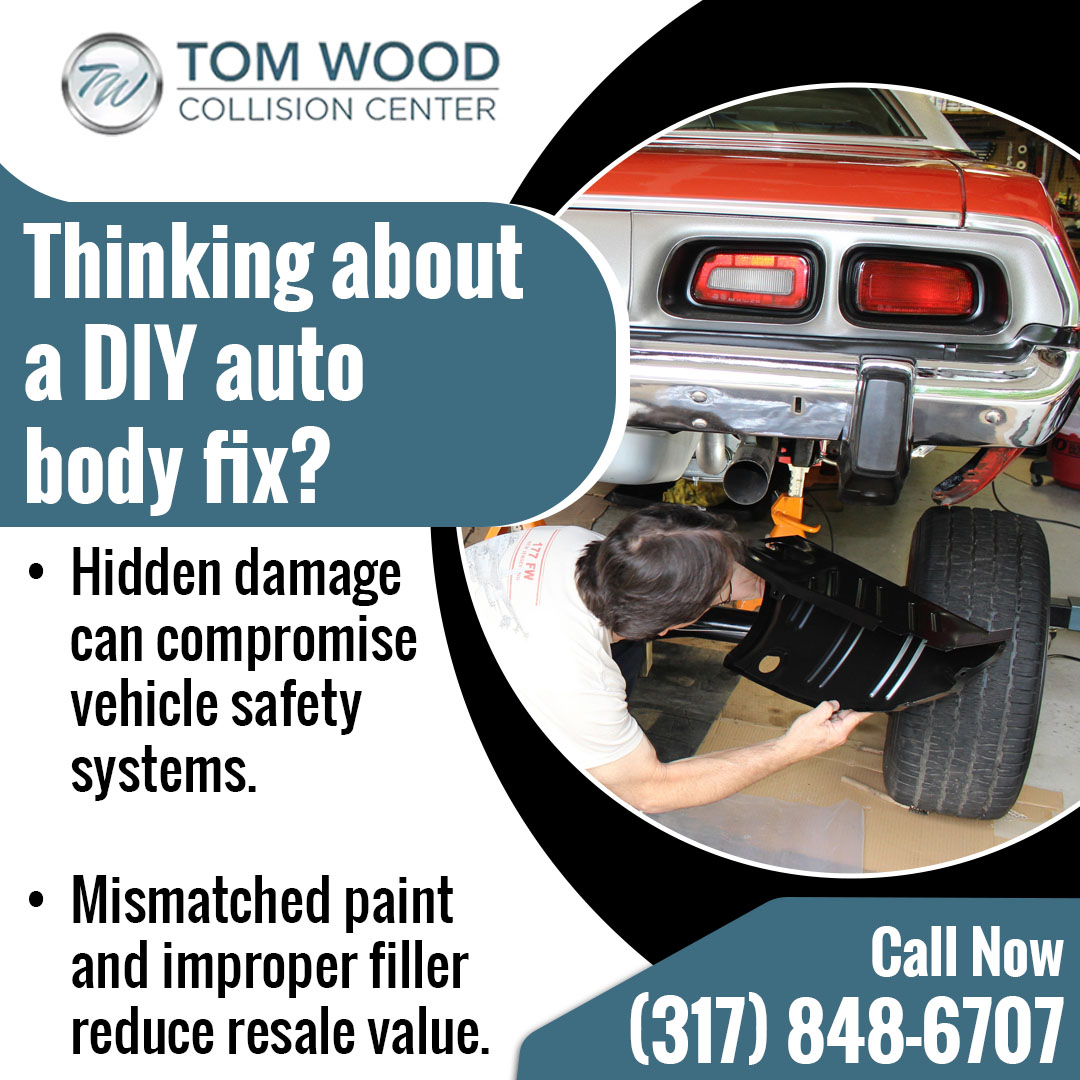
Professional Repair Protects What Matters Most
The choice between DIY attempts and professional auto body repair in Indianapolis affects more than immediate expenses. It determines whether your vehicle maintains structural integrity, safety system functionality, and resale value after collision damage.
When collision damage creates questions about proper repair approaches, contact Tom Wood Collision Center at (317) 848-6707 for professional damage assessment. Our certified technicians provide honest evaluations, explaining repair requirements and helping you make informed decisions about protecting your vehicle investment.