


Indianapolis roads present year-round challenges that damage vehicle exteriors through potholes, winter road treatments, construction debris, and extreme weather cycles. These conditions create dents, scratches, paint damage, and undercarriage issues that require professional attention to prevent rust and maintain vehicle value. The city's infrastructure struggles with seasonal freeze-thaw cycles that crack pavement and form potholes at alarming rates. Vehicle owners throughout Indianapolis, Carmel, Fishers, and surrounding communities face mounting repair needs from road-related damage.
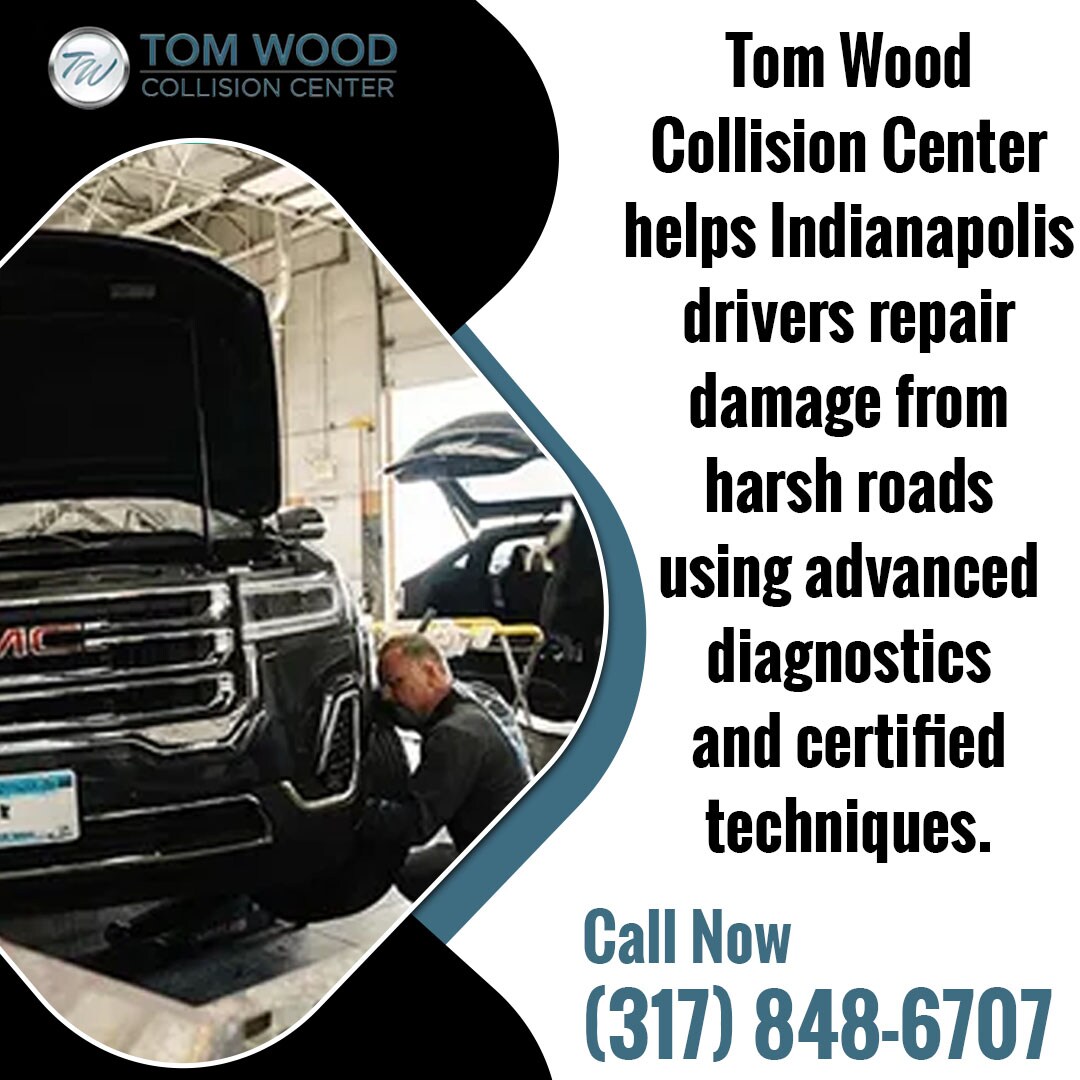
At Tom Wood Collision Center, we address these road-related issues through specialized repair techniques, manufacturer-certified procedures, and protective coatings. Our auto body shop in Indianapolis serves drivers throughout the metropolitan area with I-CAR Gold Class certified services. From minor paint chips to major collision repairs, our certified technicians restore vehicles to manufacturer specifications while protecting against future road damage.
Common Road Conditions That Damage Vehicles
Indianapolis roads inflict multiple forms of damage on vehicle exteriors throughout the year. Each damage type requires specific repair approaches based on severity and affected components.
Pothole Impact Problems
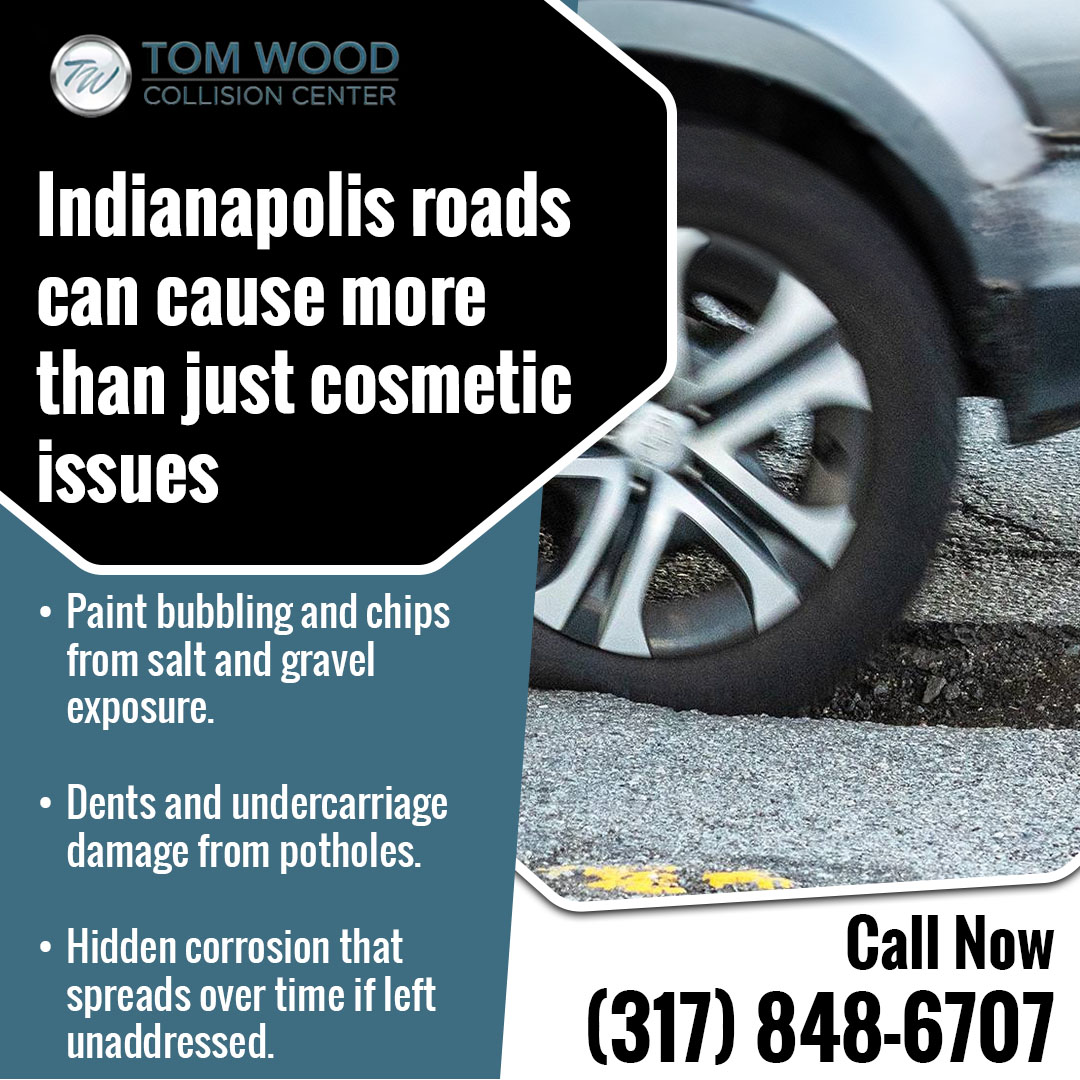
Potholes develop when water seeps into pavement cracks and freezes during winter, causing the moisture to expand and push the road surface upward. When the ice melts, it leaves hollow spaces beneath the pavement that collapse under vehicle traffic, creating the holes that damage cars. Indianapolis Department of Public Works crews work continuously to address these issues, yet new damage appears faster than repairs can be completed.
Potholes pose serious risks to vehicles at all speeds. Vehicles hitting deep potholes at higher speeds sustain more severe damage than those traveling slowly. The sudden jarring motion transfers force through the entire vehicle structure, affecting multiple exterior components simultaneously.
Winter Salt and Chemical Residue
Indiana belongs to the Salt Belt, a region where winter road treatments accelerate vehicle corrosion. The Indiana Department of Transportation (INDOT) deploys extensive crews during winter storms, applying salt and brine treatments to roadways throughout the state.
Road salt contains sodium chloride that bonds with vehicle surfaces and attracts moisture. This combination creates electrochemical reactions that corrode metal body panels, door edges, wheel wells, and undercarriage components. The hygroscopic nature of salt means it continues attracting atmospheric moisture even during dry periods, maintaining corrosive conditions between storms.
Construction Zone Hazards
Indianapolis construction projects create multiple hazards for vehicle exteriors. Loose gravel from resurfacing work chips paint when struck by tires at highway speeds. Temporary road plates cause jarring impacts that dent body panels when vehicles cross elevation changes.
Construction debris includes sharp metal fragments, concrete chunks, and discarded materials that puncture or scratch vehicles. These items often hide in shadows or blend with road surfaces, making them difficult to spot until impact occurs. Detour routes frequently traverse rougher secondary roads with their own maintenance issues, including additional potholes, uneven surfaces, and drainage problems.
Seasonal Road Surface Changes
Road surfaces change throughout the year, creating different hazards each season.
Winter road conditions include:
-
Frozen ruts and uneven surfaces from compacted snow.
-
Increased pothole formation from freeze-thaw cycles.
Spring road conditions include:
-
Weakened pavement from winter damage that crumbles under traffic.
-
Increased debris on roads from winter sand and gravel cleanup.
-
Water-filled potholes that hide their true depth from drivers.
Summer road conditions include:
-
Softened asphalt that creates tar splatter on lower body panels.
-
Expanded pavement joints with raised edges that scrape undercarriages.
Fall road conditions include:
-
Covered storm drains creating standing water and hidden potholes.
Effects of Road Damage on Vehicle Components
Road damage affects multiple vehicle systems beyond obvious cosmetic issues. Understanding these impacts helps vehicle owners determine when to visit an auto body shop near you for professional assessment.
Paint and Protective Coatings
Paint systems consist of multiple layers serving specific protective functions.
-
Base primer provides metal adhesion and corrosion resistance.
-
Color coats deliver appearance.
-
Clear coat layers protect underlying paint from UV radiation and chemical exposure.
Road damage compromises these protective layers, exposing vulnerable materials to moisture and corrosive elements. Small paint chips allow water to reach bare metal, initiating oxidation processes that spread beneath surrounding paint. The resulting rust bubbles expand existing damage and create larger repair requirements.
Stone chips from road debris remove clear coat and color layers simultaneously. These concentrated damage points penetrate deeper than surface scratches from car washes or light abrasion. Each chip represents a potential rust initiation site requiring professional attention from an auto body shop near you.
Salt exposure degrades paint adhesion even without visible damage. Chemical reactions weaken the bond between paint layers and metal surfaces. This hidden deterioration appears later as paint lifting, bubbling, or peeling in affected areas.
Body Panel Integrity
Dents from pothole impacts and road debris alter panel geometry beyond appearance concerns. Metal panels work hardened by impact forces become brittle in affected areas. Subsequent impacts to weakened sections cause cracking or tearing rather than additional denting.
Door panels receive concentrated damage from parking lot incidents and road hazards. These frequently opened components experience additional stress from normal use that compounds existing damage. Small dents near door edges can interfere with proper closing and sealing functions.
Quarter panels and fenders sustain damage from tire-thrown debris and construction zone hazards. The curved surfaces of these panels make them particularly vulnerable to visible damage from relatively minor impacts. Restoration requires specialized techniques to maintain original contours.
Undercarriage Components
Splash shields and undercarriage covers protect mechanical components from road debris and moisture. Damage to these protective elements exposes expensive mechanical systems to corrosive conditions. Missing or damaged shields allow salt-laden slush to contact brake lines, fuel lines, and electrical components.
Exhaust systems suffer damage from severe pothole bottoming and road debris impacts. Bent pipes, damaged hangers, and punctured components affect vehicle performance beyond auto body shop concerns. However, exhaust damage often accompanies repairable body damage from the same incident.
Frame rails and structural members require inspection after severe pothole strikes. While most road damage remains cosmetic, exceptional impacts can affect structural components. Professional assessment identifies hidden damage that compromises vehicle safety.
Professional Repair Solutions for Road Damage
Auto body shops provide specialized services addressing road-related vehicle damage. Repair selection depends on damage type, severity, and location on the vehicle.
Paintless Dent Repair Applications
Paintless Dent Repair (PDR) removes dents without disturbing original paint finishes. Technicians access panel backsides through existing openings and carefully massage dented metal back to its original contours. This technique works well for minor pothole dents on accessible panels when paint remains intact.
The process preserves factory paint quality while eliminating visible damage. Vehicles maintain higher resale values when original paint remains undisturbed. PDR offers a faster turnaround compared to traditional bodywork that requires painting and curing time.
PDR limitations include creased dents, paint damage, and inaccessible panel locations. Technicians evaluate each dent individually to determine PDR suitability. Factors include dent depth, panel accessibility, metal thickness, and paint condition around damaged areas.
Traditional Dent Repair and Refinishing
Traditional bodywork addresses damage beyond PDR capabilities. This process includes panel straightening, filler application when necessary, surface preparation, and complete refinishing to match the surrounding areas.
Panel straightening uses specialized hydraulic systems and pulling towers to restore dented metal to its original contours. Body filler smooths any remaining irregularities after mechanical correction. Paint matching requires sophisticated color analysis since factory finishes fade over time. Spectrophotometers measure exact color values and generate custom formulas.
Paint Restoration and Chip Repair
Minor paint damage receives targeted correction without full panel refinishing. Stone chips, key scratches, and small scrapes respond to spot repair techniques when damage remains localized.
Paint chip repair fills damaged areas with color-matched paint and clear coat layers. Technicians build up multiple thin layers to achieve proper thickness without creating noticeable edges. Final polishing blends repairs into surrounding surfaces.
Larger scratches require more involved procedures. Deep scratches penetrating to the primer or metal need proper preparation before painting. Surface scratches affecting only clear coat layers receive correction through careful sanding and polishing techniques.
Professional results require proper materials and application techniques. Original Equipment Manufacturer (OEM) paint specifications guide material selection for certified repairs. Temperature and humidity control during application prevents defects like runs, orange peel, or insufficient curing.
Protective Coating Applications
Post-repair protective treatments extend repair longevity and defend against future damage. Ceramic coatings provide hydrophobic surfaces that shed water and contaminants. These molecular bonds create harder surfaces, more resistant to light scratches and chemical exposure.
Sealants and waxes offer temporary protection requiring regular reapplication. Professional-grade products deliver superior performance compared to consumer alternatives. Application techniques affect coverage uniformity and durability.
Undercoating treatments protect vulnerable undercarriage areas from salt exposure and road debris. These applications coat frame rails, suspension components, and body panel undersides with rubberized or wax-based protective layers. Annual reapplication maintains protection through harsh winter conditions.
Recognizing When Professional Service Becomes Necessary
Vehicle owners often delay repairs for minor damage, risking increased deterioration from corrosion and expanding damage. Specific indicators signal when a professional assessment becomes advisable.
Immediate Attention Requirements
Exposed bare metal requires immediate professional attention regardless of the size of the damage. Contact an auto body shop near you when you notice:
-
Unprotected steel that oxidizes rapidly when moisture reaches exposed surfaces.
-
Small chips that expand into larger rust spots within weeks during wet conditions.
-
Paint bubbling or lifting indicating active rust formation beneath paint layers.
-
Deep dents affecting body lines or panel edges with potential hidden damage.
-
Cracked paint on panel backsides or damaged spot welds from impact stress.
Progressive Damage Indicators
Multiple warning signs indicate when to visit auto body shops for evaluation:
-
Small paint chips clustered in a single area, allowing moisture penetration.
-
Door edge damage, combining both impact dents and paint removal.
-
Rocker panel damage in areas where salt and moisture accumulate.
-
Grouped damage that initiates rust formation across larger areas.
-
Deterioration spreading faster on flexible components like door edges.
Seasonal Timing Considerations
Strategic timing for repairs protects your vehicle investment:
-
Spring repairs address winter damage before summer heat accelerates deterioration.
-
Pre-winter service protects vulnerable areas from upcoming salt exposure.
-
Post-hailstorm assessments preserve insurance claim validity with prompt documentation.
-
Fresh paint and protective coatings provide maximum resistance to corrosive treatments.
-
Early intervention prevents structural concerns requiring expensive panel replacement.
Professional Auto Body Services in Indianapolis
Tom Wood Collision Center provides manufacturer-certified repairs addressing road damage affecting Indianapolis-area vehicles. Our auto body shop combines advanced technology, certified technicians, and OEM-approved procedures to deliver repairs that restore both appearance and protective functions.
Advanced Diagnostic Capabilities
We employ Helios by UVEYE technology to perform AI-powered underbody scans that identify damage invisible during standard visual inspections. This system captures complete undercarriage images and analyzes findings against manufacturer specifications. Hidden damage from severe pothole strikes and undercarriage scraping receives proper attention before causing mechanical failures.
Our diagnostic approach examines all potentially affected systems, not just obvious damage points. Road impacts transfer force through vehicle structures in ways that can damage components distant from initial contact areas. Thorough assessment prevents overlooked issues that compromise repair quality.
Frame measurement systems verify structural integrity after significant impacts. Computerized equipment measures hundreds of reference points and compares results against manufacturer specifications. Even minor deviations receive correction to maintain proper vehicle geometry.
Certified Repair Standards
At Tom Wood Collision Center, our technicians hold certifications from I-CAR and ASE (Automotive Service Excellence), representing the highest training standards in collision repair. These certifications require ongoing education as repair technologies and vehicle designs evolve.
We maintain manufacturer certifications from over 20 automotive brands, including requirements specific to luxury and performance vehicles. These certifications validate our capability to perform repairs meeting original equipment specifications. Certified auto body shops follow prescribed procedures that maintain vehicle safety systems and warranty coverage.
We follow OEM repair procedures to guide all our restoration work. Manufacturers specify welding techniques, structural adhesives, and assembly sequences that preserve crash protection and safety system function. We adhere strictly to these procedures because deviation can compromise your vehicle's performance during subsequent collisions.
Paint Matching and Refinishing Excellence
At Tom Wood Collision Center, we utilize Sherwin-Williams Collision Core Pronto automated paint-mixing systems that deliver consistent color accuracy. This technology measures precise quantities of tinting components and mixes custom formulas matching your specific vehicle color. The system accounts for paint fade and environmental exposure that alter original colors over time.
Our auto body shop in Indianapolis has climate-controlled spray booths that provide optimal conditions for paint application and curing. Temperature and humidity control prevent defects while supporting proper chemical reactions within paint materials. Filtered air systems eliminate contaminants that could mar finished surfaces.
We use multi-stage refinishing processes to build proper paint thickness while maintaining smooth, glossy finishes. Our technicians apply base coats with proper flash times between layers, and our clear coat techniques all follow manufacturer specifications. Our final color and gloss matching make repairs invisible under all lighting conditions.
Contact Tom Wood Collision for Auto Body Repairs
Indianapolis road conditions create ongoing challenges for vehicle owners throughout the year. Potholes, salt exposure, construction debris, and weather extremes all contribute to exterior damage requiring professional correction. Delaying repairs allows minor issues to develop into expensive problems affecting vehicle value and safety.
At Tom Wood Collision Center, we address different forms of road damage, from minor paint chips to major dent repairs and complete panel refinishing. Our auto body shop uses advanced technology, including AI-powered underbody scanning and computerized paint matching, to deliver superior results that restore both appearance and protection.
Contact us at (317) 848-6707 for damage assessment and repair estimate. When you need an auto body shop in Indianapolis that delivers manufacturer-certified quality, trust the professionals at Tom Wood Collision Center.