

The repair facility you select after a collision determines whether your car returns to factory specifications or becomes a safety liability. Drivers face dozens of options when searching for collision repair, but not all facilities deliver the same level of quality or expertise.
Vehicle safety systems rely on precise repairs that restore structural integrity and sensor functionality. The shop you select impacts your vehicle's crash protection in future accidents. Industry reports indicate that incomplete or inaccurate repairs are more common at facilities without advanced training or diagnostics, underscoring the importance of certified training and equipment.
Tom Wood Collision Center has served Indianapolis and the surrounding areas since 2012 with certified auto collision repair that meets manufacturer specifications. We've created this checklist to help you identify the specific qualifications, technology, and procedures that separate quality facilities from shops that compromise your safety through shortcuts.
Why Your Collision Repair Choice Matters
Modern vehicles represent complex engineering systems where every component serves a specific safety function. Your vehicle's structure absorbs crash forces through engineered crumple zones that protect occupants during impacts. Radar sensors, cameras, and electronic stability systems work together to prevent accidents before they occur.
Improper repairs may compromise some safety features, especially advanced sensors, making precise procedures and calibration essential to maintain performance. A frame restored to incorrect dimensions may fail to protect you during a subsequent collision. Sensors positioned at the wrong angles may not detect hazards in time. Welds performed with incorrect heat levels create weak points that collapse under stress.
The repair shop you select determines whether your vehicle maintains its factory crash protection. Many body shops focus on cosmetic appearance without addressing the underlying safety systems that modern vehicles depend on. Certified facilities restore both appearance and the protection your vehicle was designed to provide.
Your Collision Repair Selection Checklist
Use this checklist when evaluating repair facilities to make an informed decision that protects your safety and investment:

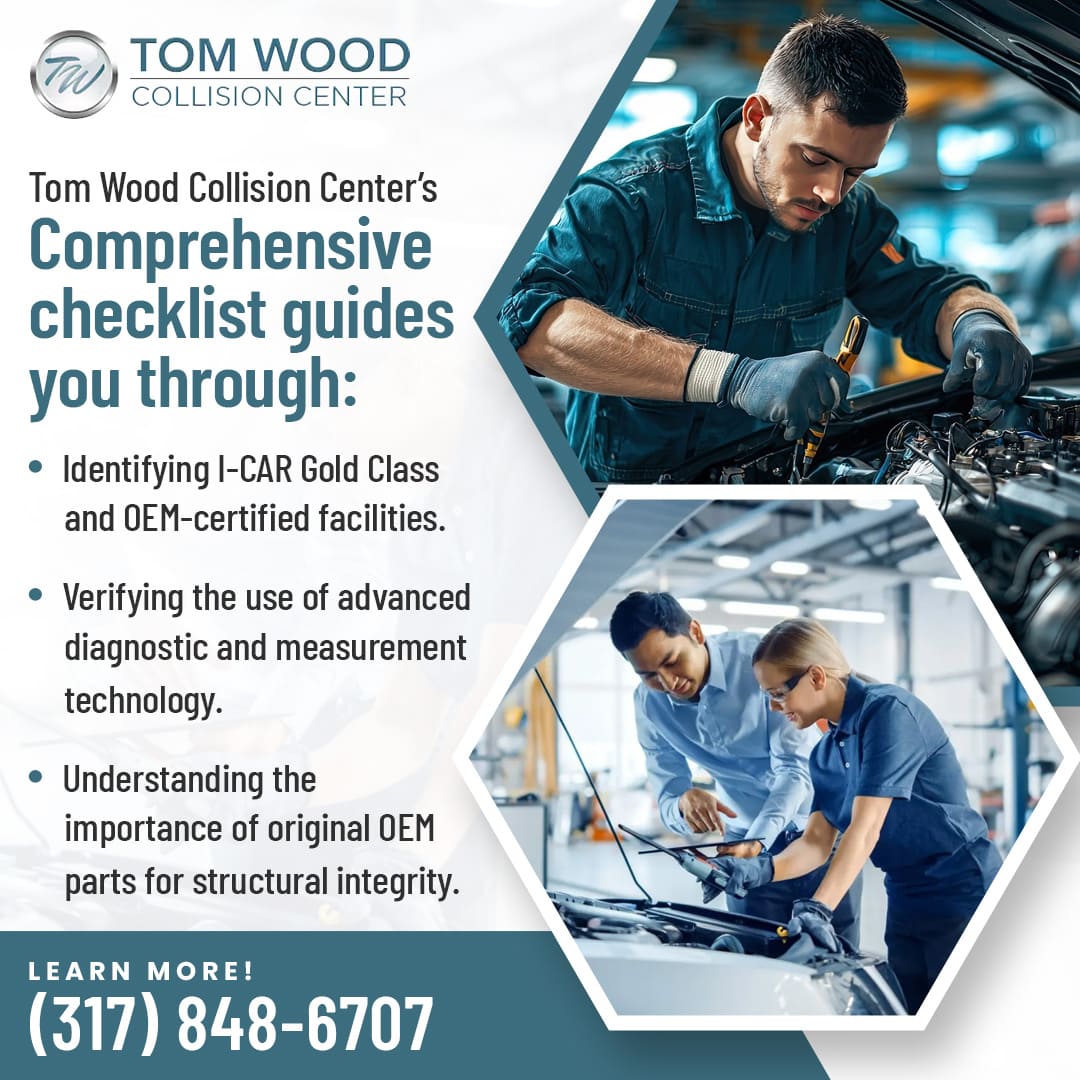
Certifications to Verify: I-CAR Gold Class, ASE certifications, OEM certifications for your vehicle make.
-
Equipment and Technology: Diagnostic scanning, computerized measuring systems, automated paint mixing, and climate-controlled paint booths.
-
Facility Standards: Clean, organized work areas, separate spaces for aluminum and steel repairs, modern equipment.
-
Parts and Materials: Clear OEM vs. aftermarket explanation, transparent warranty information, quick sourcing capabilities.
-
Documentation Practices: Detailed written estimates, itemized procedures, and completion reports with scan results.
-
Communication Standards: Regular progress updates, realistic timelines, and immediate delay notifications.
-
Insurance Coordination: Experience with your carrier, handles all paperwork, and advocates for proper repairs.
Industry Certifications That Matter
Certifications verify that repair facilities meet specific standards for equipment, training, and repair procedures. Look for shops holding I-CAR Gold Class status, ASE certifications, and manufacturer-specific OEM certifications. These credentials require rigorous testing, specialized equipment, and ongoing education that separates qualified facilities from basic body shops.
I-CAR Gold Class Certification
I-CAR (Inter-Industry Conference on Auto Collision Repair) Gold Class represents the highest training standard in the collision repair industry. This certification requires multiple technicians to complete role-specific training across structural repair, non-structural repair, mechanical systems, and refinishing.
Shops must renew this certification annually through continuous education on new vehicle technologies and repair methods. Gold Class facilities receive updates when manufacturers release new repair procedures, while non-certified shops lack access to current technical information. This knowledge gap affects repair quality, particularly on newer vehicles.
ASE Certification Standards
ASE (Automotive Service Excellence) certifies individual technicians rather than entire facilities. Technicians must complete two years of hands-on experience or one year of experience plus an automotive repair degree before taking certification exams.
ASE offers multiple specialty certifications that validate technician skills in collision repair, paint, and structural diagnostics. Technicians must recertify every five years to maintain current credentials. When you visit a facility, ask which technicians hold ASE credentials and in which specialties.
Manufacturer-Specific OEM Certifications
OEM (Original Equipment Manufacturer) certifications confirm that facilities meet brand-specific repair standards. Each automotive manufacturer maintains unique requirements, including specialized tools, diagnostic equipment, and brand-specific training.
For example, BMW certification mandates specialized measuring systems that verify structural dimensions within millimeter tolerances. Tesla certification requires specific welding procedures and high-voltage battery safety training.
Equipment and Facility Standards
Physical facilities and equipment reveal investment in quality repair capabilities. Look for clean, organized shops with modern equipment, dedicated work areas, and proper climate-controlled environments.
Workspace Organization and Cleanliness
Clean, organized work areas indicate systematic processes and attention to detail. Look for designated spaces for different repair stages, proper tool storage, and clear traffic flow through the facility. Cluttered shops with disorganized equipment often produce inconsistent repair quality.
Separate work areas are required for aluminum and steel repairs to prevent cross-contamination. Aluminum requires dedicated tools and workspace because contact with steel particles causes galvanic corrosion that weakens repairs over time.
Climate-Controlled Paint Facilities
Paint application requires controlled environments to prevent contamination and defects. Dedicated paint booths with proper ventilation, temperature control, and humidity management produce durable, defect-free finishes. Shops applying paint in open areas without environmental controls compromise finish quality.
Ask whether the shop maintains dedicated paint booths and how they control dust, temperature, and humidity during application and curing stages.
Equipment Age and Maintenance
Modern, well-maintained equipment indicates investment in current repair capabilities. Outdated equipment or poorly maintained tools suggest facilities that haven't kept pace with vehicle technology advances. Equipment condition, tool organization, and overall facility maintenance reflect the care your vehicle receives during repairs.
Advanced Diagnostic Technology Requirements
Modern vehicles contain electronic systems that require diagnostic equipment beyond visual inspection. Quality facilities use pre-repair and post-repair scanning, computerized measuring systems, and manufacturer-specific diagnostic tools to identify both visible and hidden damage.
Electronic Diagnostic Scanning
Pre-repair scanning identifies damaged sensors, communication errors, and calibration problems before repairs begin. This diagnostic step reveals issues that visual inspection cannot detect. These discoveries prevent mid-repair surprises that delay completion. Post-repair scanning verifies that all systems function correctly after work completion.
Advanced scanning equipment communicates with electronic control units (ECUs) throughout your vehicle. Diagnostic scanners identify fault codes, verify sensor operations, and confirm proper system communication.
Computerized Vehicle Measurement
Laser measurement systems track structural corrections in real time during repair processes. These systems compare current dimensions against manufacturer specifications while guiding technicians toward exact tolerances. Frame straightening equipment then applies controlled forces that reshape damaged structures without causing additional stress.
Structural repairs must restore your vehicle to its precise original dimensions. Precision measurements help ensure alignment within manufacturer tolerances, which supports structural integrity and safety system performance. Computerized measurement eliminates guesswork and documents that repairs meet manufacturer specifications.
Parts Quality and Sourcing Practices
The parts used during repairs directly impact your vehicle's safety, performance, and long-term value. Quality facilities explain the differences between parts sources and help you make informed decisions based on your vehicle's needs. How facilities source parts separates collision repair near you that prioritizes your protection from those reducing expenses at your risk.
OEM Parts Advantages
OEM (Original Equipment Manufacturer) parts come from your vehicle's original manufacturer and meet exact specifications for fit, finish, and safety performance. These parts maintain your vehicle's warranty coverage and crash protection as designed.
Structural components, safety systems, and body panels benefit most from OEM parts. Ask whether the shop stocks OEM parts or can source them quickly to prevent repair delays.
Aftermarket Parts Considerations
Aftermarket parts come from third-party manufacturers and vary widely in quality. Some aftermarket parts meet or exceed OEM standards, while others use inferior materials or imprecise manufacturing that affects fit and function.
Quality shops explain when aftermarket parts provide acceptable alternatives and when OEM parts better serve your interests. Avoid facilities that automatically default to aftermarket parts without discussing the implications for your specific vehicle.
Parts Warranty Terms
Different parts come with different warranty coverage. OEM parts typically include manufacturer warranties, while aftermarket parts may have limited or no warranty coverage. Ask about warranty terms for all parts used in your repair before authorizing work.
Some facilities offer their own warranties that cover parts and labor regardless of the source. Understanding warranty coverage before repairs begin protects you if components fail after installation.
Repair Timeline Transparency
Realistic repair timelines demonstrate honest business practices and proper planning. Avoid facilities making unrealistic promises or are unable to explain factors affecting completion dates.
Factors Affecting Repair Duration
Repair timelines depend on damage extent, parts availability, shop workload, and insurance approval processes. Quality facilities provide honest estimates based on these factors rather than promising unrealistic completion dates to secure your business.
Paint curing alone requires several days for proper hardness and durability. Structural repairs need time for precise measurements and corrections. Safety system calibration cannot be rushed. Promises of unusually fast repairs often indicate shortcuts that compromise quality.
Parts Availability Communication
Parts for newer vehicles or specialized models may require ordering from distant suppliers. Quality shops check parts availability before providing completion estimates and update you if delays occur. Ask how the shop handles parts delays and whether they notify you promptly.
Progress Updates and Communication
Regular communication throughout repairs keeps you informed and prevents surprises. Ask how often the shop provides updates, through which methods (phone, text, email), and who serves as your primary contact person. Quality facilities establish communication expectations upfront and follow through with regular updates.
Written Documentation Standards
Proper documentation protects your interests throughout the repair process. Request detailed written estimates, repair plans, and completion documentation that you can review and keep for your records.
Detailed Repair Estimates
Written estimates should itemize every repair procedure, part specification, and associated information. This documentation allows you to understand exactly what work your vehicle receives and compare options between different facilities.
Estimates must specify whether repairs use OEM, aftermarket, or recycled parts. Labor rates, paint materials, and completion timelines should appear in writing before you authorize any work. Verbal estimates without written documentation create opportunities for disputes.
Supplemental Damage Procedures
Initial estimates typically cover visible damage identified during external inspection. Disassembly often reveals additional issues like bent structural members, damaged sensors, or compromised safety components. Ask how the shop handles discovered damage and obtains approval for additional repairs.
Completion Documentation
Upon completion, request documentation showing all work performed, parts installed, and systems tested. This record proves that auto collision repairs were completed as authorized and provides the information you need if issues develop later. This documentation supports warranty claims and demonstrates repair quality if you sell your vehicle.
Insurance Company Relationships
Understanding insurance processes helps you navigate claims while maintaining repair quality. You have the right to choose your repair facility regardless of insurance company recommendations or preferred shop networks. This freedom allows you to select collision repair near you based on qualifications and quality rather than insurance company cost preferences.
Your Rights as a Vehicle Owner
Insurance companies maintain preferred shop networks called Direct Repair Programs (DRPs). While these relationships can streamline claims processing, you are not required to use network shops. Insurance policies cannot force you to specific facilities. Choosing a facility based on quality standards rather than insurance recommendations protects your interests. Your vehicle's safety and long-term value matter more than insurance company preferences.
Insurance Claim Documentation
Quality facilities provide detailed documentation that supports your insurance claim. Thorough damage assessments with photographic evidence prevent disputes over repair necessity. Advanced scanning reports document electronic system damage that visual inspection cannot detect.
Shops experienced in insurance coordination understand documentation requirements and approval processes. This expertise speeds claim resolution and reduces your administrative involvement. Ask how the facility handles supplemental damage discoveries and obtains additional approvals.
Rental Vehicle Coordination
Extended repair times may require rental vehicles. Some facilities coordinate directly with rental companies and your insurance carrier to arrange transportation. Others may not provide this service, but can recommend rental options.
Ask about rental procedures before authorizing repairs. Understanding whether the shop handles rental coordination or whether you must make separate arrangements prevents transportation difficulties during the repair period.
The Tom Wood Collision Repair Advantage
Drivers seeking certified auto collision repair near Carmel and surrounding areas have trusted Tom Wood Collision Center since 2012. Our facility combines manufacturer certifications, advanced technology, and transparent processes that deliver factory-specification repairs. Here's how we address every point on this checklist:
-
Certifications and Ongoing Training: We maintain certifications from over 20 automotive manufacturers, including Porsche, Jaguar, Land Rover, Volvo, Lexus, Honda, Toyota, Ford, and General Motors, with I-CAR Gold Class status and ASE-certified technicians who receive ongoing training on the latest repair methods and automatic updates on new manufacturer procedures.
-
Advanced Diagnostic Technology: Tom Wood Collision Center operates the first UVEYE Helios system installed in a collision center nationwide for millimeter-level damage detection, combined with Sherwin-Williams automated paint mixing system, laser measurement systems for real-time structural verification, and pre-repair and post-repair electronic diagnostic scanning on all vehicles.
-
OEM Parts Priority: We prioritize OEM parts for all structural repairs and safety-related components, explain parts options clearly to help you make informed decisions, provide warranty coverage details for all parts, and stock common OEM parts to minimize delays.
-
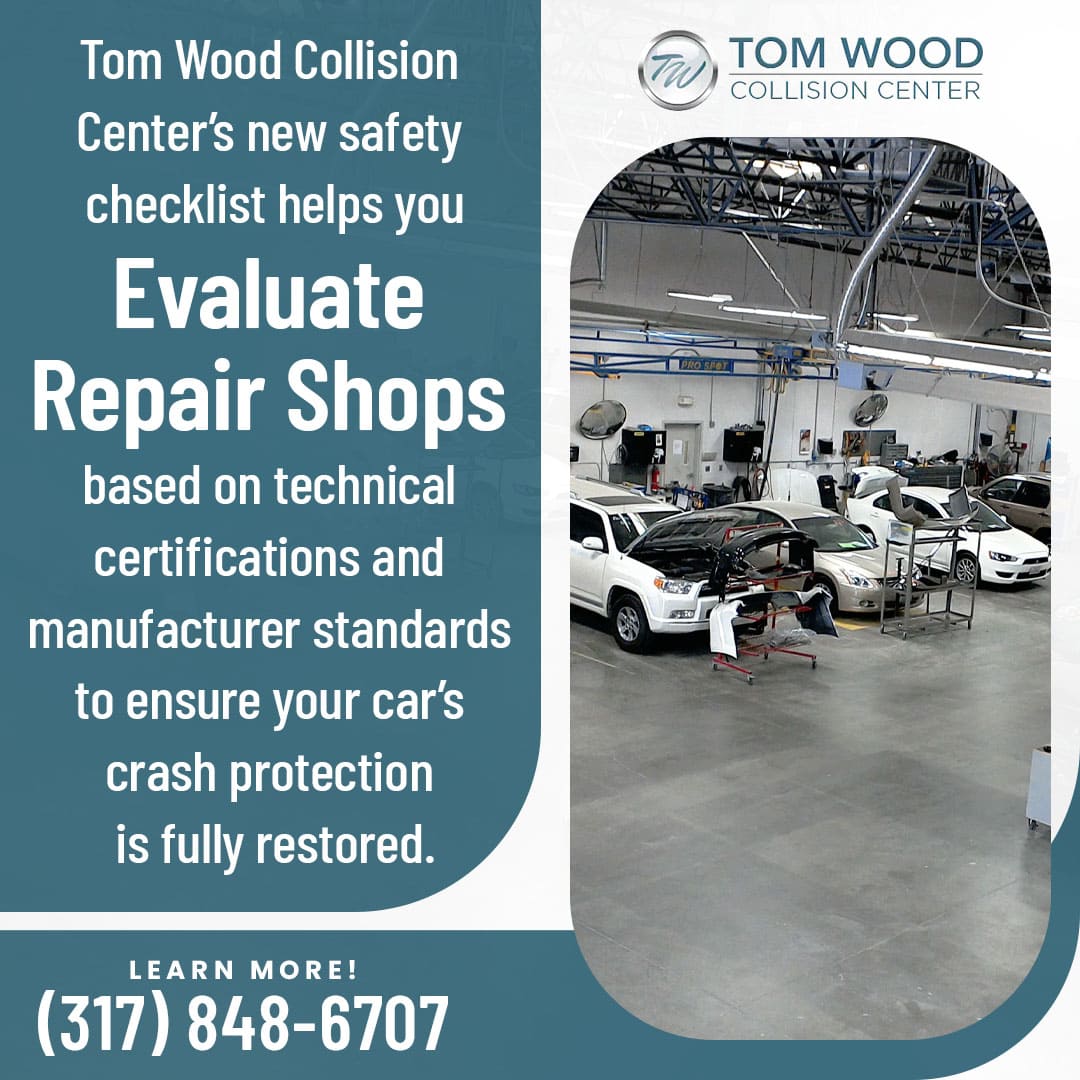
Professional Facility Standards: Our facility maintains separate dedicated work areas for aluminum and steel repairs, operates climate-controlled paint booths with proper ventilation, keeps clean, organized workspaces with modern equipment, and displays all certifications prominently for customer review.
-
Transparent Documentation: We provide detailed written estimates with itemized repairs and parts specifications, handle all insurance communication and paperwork directly with adjusters, send regular progress updates via your preferred method, document all supplemental damage with photographs before requesting authorization, and deliver completion reports with pre-repair and post-repair scan results.
-
Honest Timeline Management: We verify parts availability before providing completion estimates, explain all factors affecting repair duration honestly, update you immediately if unexpected delays occur, and never rush repairs to meet unrealistic deadlines.
-
Complete Insurance Support: Tom Wood Collision Center works with all major insurance carriers, provides detailed documentation that supports your claim, advocates for proper repairs using OEM parts when necessary, and assists with rental vehicle coordination through your insurance coverage.
Get Certified Collision Repair You Can Trust
Whether you need auto collision repair near Carmel after an accident or want to restore your vehicle's appearance, Tom Wood Collision Center provides the certified expertise drivers deserve. Our transparent approach keeps you informed while our advanced technology delivers results that meet factory standards. Call us at (317) 848-6707 for your free estimate and manufacturer-certified auto collision repair that prioritizes your safety and satisfaction.