


Certification in auto body and collision repair is not a marketing credential. It is a documented record that a shop has the equipment, the trained technicians, and the verified procedures to repair a vehicle the way its manufacturer intended. Without it, there is no external standard holding a shop accountable to anything beyond the cosmetic result.
Tom Wood Collision Center in Indianapolis holds certifications from nearly every leading vehicle manufacturer, and we maintain active I-CAR and ASE credentials across our technician team. Understanding what those credentials require and what they mean for your vehicle helps you make a more informed decision when choosing auto body repair near you.
Certification in Auto Body and Collision Repair
Certification is an external, third-party verification that a shop meets documented standards for equipment, trained technicians, and repair procedures. It is not a self-declared status. Each credential requires a shop to pass audits, maintain active training records, and operate specific equipment before the designation is granted or renewed.
The auto body repair industry has no universal minimum standard requiring every shop to hold verified credentials before accepting vehicles. Any facility can open and complete repairs without a single certification. That absence of a floor is precisely what makes verified credentials meaningful for drivers choosing where to take their vehicle.
Certification programs exist at two levels: independent industry organizations that set training benchmarks, and vehicle manufacturers that approve shops to repair their specific models to factory standards. A fully certified auto body repair shop typically holds credentials from both.
Types of Certification a Qualified Shop Holds
Collision repair certification comes from three distinct sources. Each covers a different layer of a shop's operation.
OEM Program Approval
OEM stands for Original Equipment Manufacturer. OEM certification is issued directly by vehicle manufacturers (brands such as Ford, Toyota, Honda, BMW, and General Motors) after a shop has met their specific equipment, training, and procedural requirements.
Each manufacturer runs its own program with its own standards. A shop certified by Ford is not automatically qualified to repair a BMW to factory standards. The credentials are brand-specific because the repair procedures, materials, and construction methods differ considerably between manufacturers.
What every OEM program shares is independent verification. A shop does not self-certify. Facility audits are conducted by third parties, and certifications must be actively maintained through ongoing training and equipment standards.
I-CAR Gold Class Standing
I-CAR, which stands for Inter-Industry Conference on Auto Collision Repair, is an independent nonprofit organization that sets training standards for the collision repair industry. Its Gold Class designation is the industry's leading recognition for shops that invest in role-specific, ongoing technician education.
To hold Gold Class status, all structural technicians must complete ProLevel 2 training at a minimum. At least half of the shop's role representatives across estimating, non-structural repair, and refinishing must meet the same requirement. That is not a one-time box to check. Annual renewal is required, so a shop's training record reflects where its technicians stand today, not where they stood when they first earned the credential.
ASE Technician Credentials
ASE stands for Automotive Service Excellence. Unlike OEM and I-CAR programs, ASE certification applies to individual technicians rather than the shop as a whole. Technicians earn credentials by passing standardized exams covering areas such as structural analysis, paint and refinishing, and damage estimation, then renew those credentials through continuing education.
A shop staffed by ASE-certified technicians has individuals whose technical knowledge has been independently tested and verified, not simply claimed.
Equipment a Certified Auto Body Repair Shop Must Operate
Certification does not reward intention. It verifies capability. Each program requires a shop to demonstrate, through audits and documentation, that specific equipment is present and operational.
Computerized Frame Measuring Systems
These systems compare a vehicle's actual post-repair dimensions against the manufacturer's published specifications. They detect structural deviations that visual inspection and manual measurement cannot reliably identify.
A vehicle can look straight and still be outside factory dimensional tolerances. Without computerized measuring equipment, a shop has no objective way to confirm that a structural repair is correct. The repair may appear complete while the vehicle's geometry remains outside the range the manufacturer engineered it to hold.
Climate-Controlled Spray Booths
Paint applied outside of the manufacturer's specified temperature and humidity range can fail over time, showing signs of peeling, blistering, or color shift months after the repair. A climate-controlled spray booth maintains the environmental conditions required for proper adhesion and curing. Shops without this equipment cannot control those variables during refinishing.
Material-Specific Welding Equipment
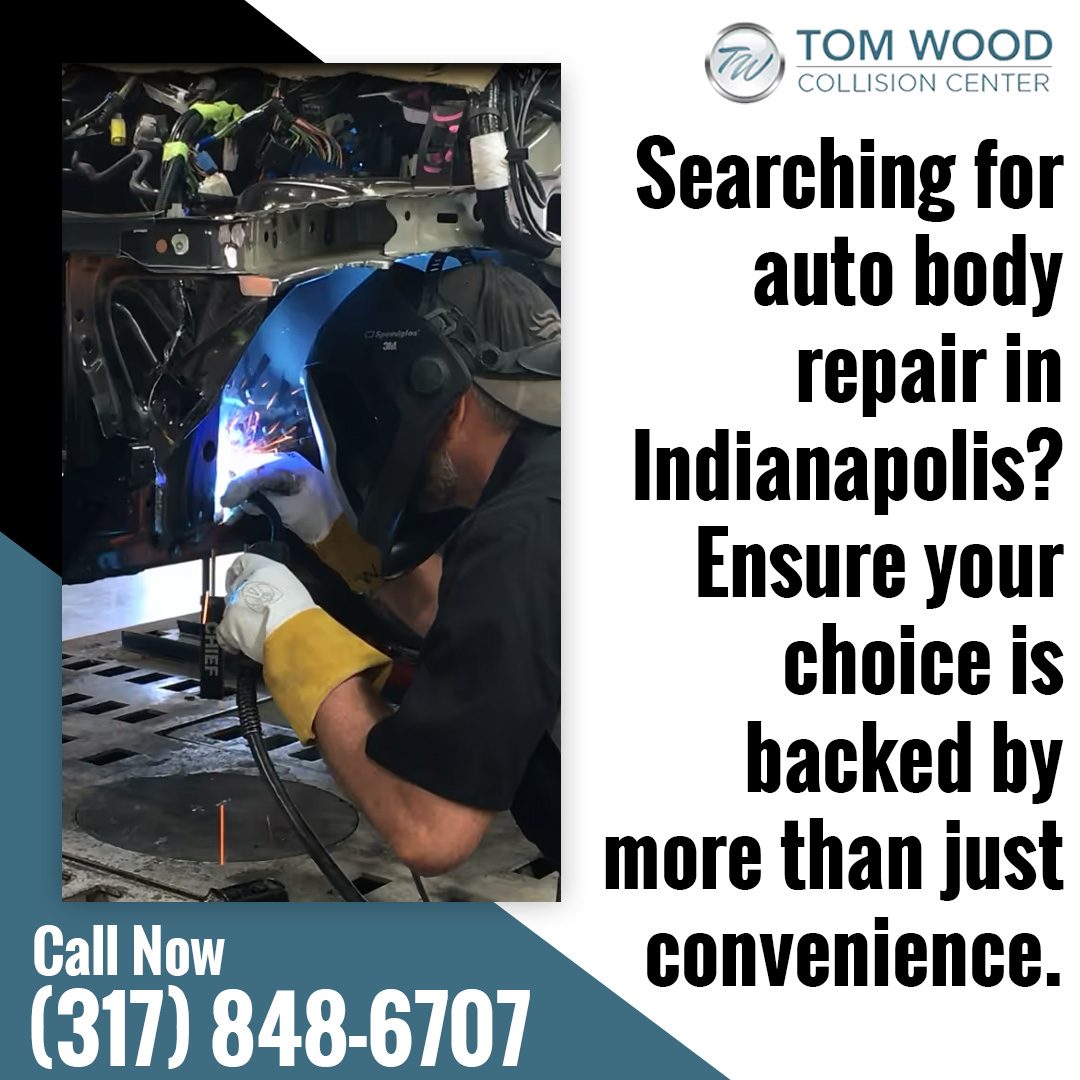
Today's vehicles are built from a combination of materials: advanced high-strength steel (AHSS), aluminum, standard steel, and bonded panels. Each requires different welding techniques and parameters. Equipment designed for standard steel will produce structurally compromised welds on aluminum or AHSS. Certified shops maintain equipment capable of working with each material type according to OEM-specified procedures.
Equipment Standards Vary by Manufacturer
Each OEM certification program sets its own equipment requirements, and the specific tools a shop must have depend on which manufacturers it is certified by. That said, certain categories of equipment appear consistently across programs: structural measuring systems, spray booths with controlled drying capability, welding equipment matched to the vehicle materials being repaired, and diagnostic scan tools for verifying electronic system integrity before and after a repair.
A shop holding certifications from multiple manufacturers must meet each program's individual equipment standards. The broader the range of certifications a shop holds, the more extensive its equipment investment needs to be.
Where Certification Shows Up on Paper
A repair estimate is more than a price breakdown. In a certified auto body repair shop, the estimate documents the specific OEM procedures that will be applied, the parts being used, whether they are OEM or aftermarket, and the labor operations required for each repair step. Each line item connects to a documented procedure.
An estimate that lists only labor hours and part names without referencing repair procedures or OEM specifications is a signal worth noting. It does not confirm that the shop is following manufacturer guidelines. It confirms only that the shop has assessed the visible damage and assigned a value to fixing it.
Before authorizing any repair, ask the shop to walk you through the estimate line by line. A certified shop will reference specific procedures for each operation. A shop that cannot explain the procedural basis for each line item may not be following OEM guidelines during the repair itself.
OEM Procedures and the Repairs They Govern
An OEM repair procedure is a manufacturer-published, step-by-step document specifying how a component should be repaired, replaced, or reinforced. These procedures exist because vehicle manufacturers engineer their vehicles with specific structural behavior in mind, and that behavior depends on auto body repairs being done the same way the vehicle was originally built.
Structural Sectioning Locations
When a structural component, such as a front rail or rocker panel, requires replacement, the manufacturer specifies exactly where it should be cut. Sectioning at the wrong location changes how collision energy travels through the vehicle's structure. A repair that looks correct from the outside may have been cut at the wrong point, with no visible indication of the difference.
Weld Parameters by Material Type
OEM procedures specify welding amperage, wire speed, weld spacing, and technique for each component. These parameters are not interchangeable between materials. Applying standard steel welding parameters to an aluminum panel produces brittle welds. Heat straightening AHSS weakens the steel's ability to absorb collision energy as designed. Neither failure is visible after the repair is complete.
Adhesive Specifications for Bonded Panels
Many modern body panels are bonded rather than welded. OEM procedures specify the adhesive type, cure time, and surface preparation required for each bonded joint. Skipping surface preparation or using an incorrect adhesive produces a bond that may hold initially but fail under stress, vibration, or temperature changes over time.
Difference Between OEM Parts and Aftermarket Parts
When your vehicle goes in for auto body repair, the parts used to restore it are as important as the procedures followed. OEM parts are components manufactured directly by or for the vehicle's original manufacturer, built to the same specifications as the parts that came on the vehicle when it left the factory. Aftermarket parts are produced by third-party manufacturers to approximate those specifications, but without the same testing, tolerances, or fit verification that the original manufacturer applies.
Where the Difference Shows Up
The gap between OEM and aftermarket parts is not always visible at delivery. It shows up in how panels align over time, how paint adheres across panel edges, and how structural components perform if the vehicle is in a subsequent collision.
A bumper reinforcement bar made to aftermarket specifications may not absorb and distribute collision energy the same way the OEM component was engineered to. A hood panel that fits within a wider tolerance range may create uneven gaps at the fender line that worsen as the vehicle ages.
Parts Selection and Certified Shops
Certified auto body repair shops follow manufacturer guidelines on parts selection as part of their OEM certification requirements. Many manufacturer programs require the use of OEM parts for structural components and safety-related repairs. This is not a preference. It is a condition of maintaining certified status.
For any driver searching for auto body repair near you, asking whether the shop uses OEM parts for structural and safety-related repairs is as important as asking about certifications and procedures. The answer reflects whether the shop is treating your vehicle as the manufacturer built it, or working around those standards to reduce time and effort.
When a Routine Repair Affects Safety System Accuracy
Specific collision repair types trigger ADAS (Advanced Driver Assistance Systems) recalibration as a mandatory step, regardless of whether the sensor itself was visibly damaged:
-
Windshield replacement affects the forward-facing camera mounted at the top of the glass. Even a new windshield installed at a slightly different angle from the original can offset the camera's field of view enough to affect automatic emergency braking response.
-
Bumper cover replacement affects radar sensors mounted behind the fascia.
-
Side mirror replacement affects blind spot monitoring sensors.
-
Structural repairs to the front or rear of the vehicle can shift the mounting geometry of multiple sensors simultaneously.
The Risk of an Uncalibrated System
The distinction matters because a driver may bring a vehicle in for what appears to be a straightforward bumper repair and leave with an uncalibrated radar sensor, with no warning light and no obvious sign that the system is no longer functioning correctly.
A miscalibrated blind spot monitor may not register vehicles in adjacent lanes. A forward collision warning sensor displaced slightly from its calibrated position may fail to trigger in time during an emergency stop. Neither failure produces an immediate warning. Both affect driver safety on the road.
A certified shop identifies which sensors are affected at the point of damage assessment, not as an afterthought before delivery. Recalibration is performed using manufacturer-approved equipment and documented procedures before the vehicle leaves the facility.
Repair Standards at Tom Wood Collision Center
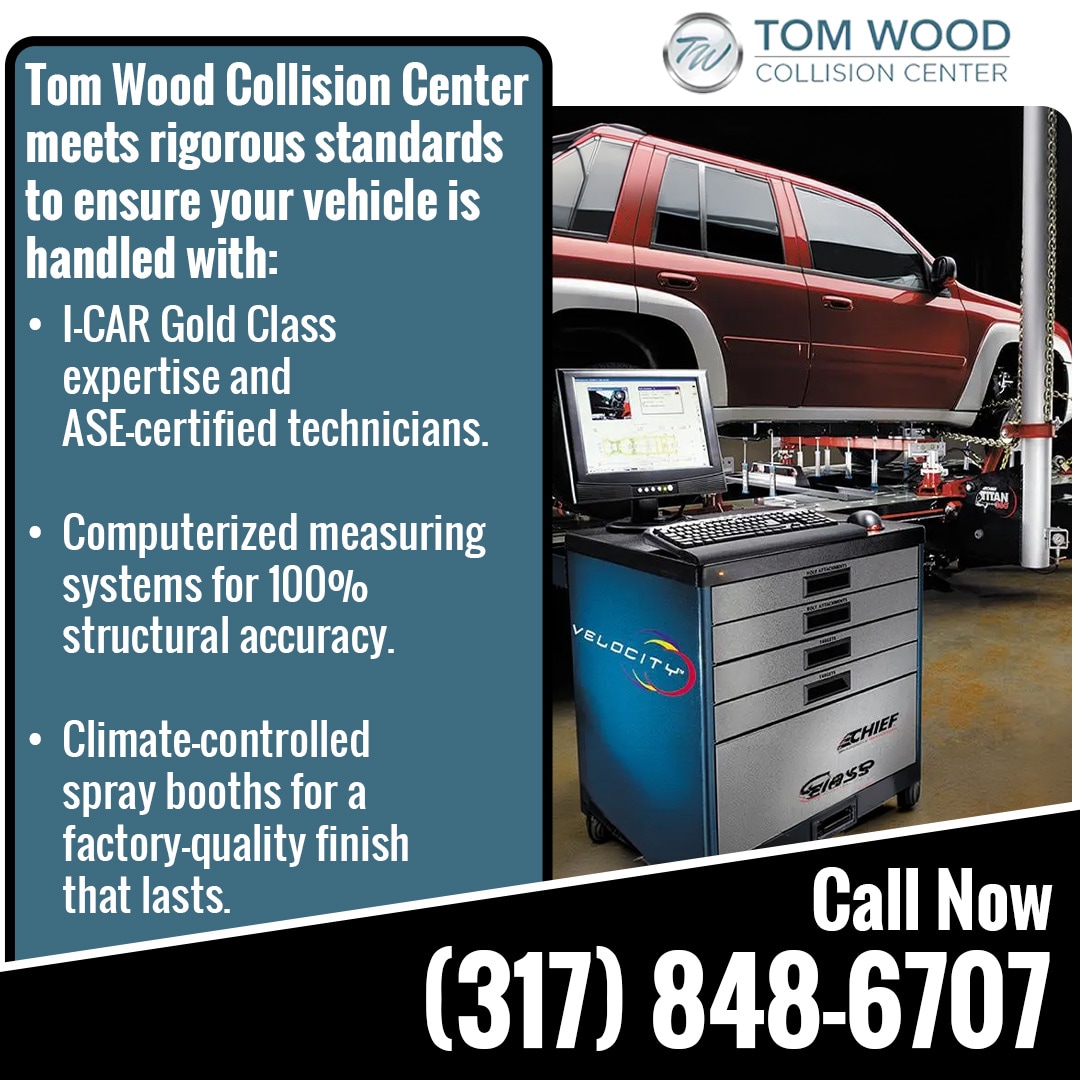
Tom Wood Collision Center holds certifications from nearly every leading vehicle manufacturer. Our technicians hold active I-CAR and ASE credentials, renewed through annual training. As a trusted auto body repair shop in Indianapolis, we hold ourselves to the same documented standards that manufacturer certification programs require, on every vehicle, regardless of make or model.
Certifications That Cover Most Vehicles on the Road
Most drivers in Indianapolis own vehicles from a range of manufacturers. Our multi-brand certifications mean that whether you drive a domestic sedan, a Japanese import, a European luxury vehicle, or a late-model truck, our shop has the verified credentials to repair it correctly. You do not need to find a different shop based on what you drive.
Technology Applied at Every Stage of the Repair
At Tom Wood Collision Center, we use AI-powered underbody scanning to identify damage not visible through standard inspection. Automated paint-mixing systems match exact formulas for each vehicle. Structural repairs are verified against manufacturer specifications using computerized measuring equipment. For vehicles with driver assistance features, post-repair ADAS calibration is performed using manufacturer-approved systems before the vehicle leaves our facility.
These are not optional steps at Tom Wood Collision Center. They are the standards applied to every vehicle we service, because cutting corners at any stage affects the result the driver experiences months down the road.
A Certified Auto Body Repair Shop in Indianapolis Restores More Than the Surface
Certification is not visible in a finished repair. It is reflected in what was done before the panels went back on and the paint was applied. It shows up months later, in how the vehicle holds up through an Indianapolis winter, in how its safety systems perform, and in how it responds if it is in another collision.
When selecting an auto body repair shop in Indianapolis, the most useful question is not which shop is closest or which responds fastest. It is the shop that can verify, through independent credentials, that the work follows the standards the vehicle was built to meet.
Tom Wood Collision Center provides manufacturer-certified repairs backed by trained technicians and documented procedures. Our certifications span nearly every major vehicle manufacturer, and our repair process follows OEM procedures from the first inspection through final quality check. Call us at (317) 848-6707 to schedule an evaluation and find out how we can restore your vehicle to the standard it was built to meet.