

Tom Wood Collision Center serves Indianapolis with manufacturer-certified repairs backed by advanced technology and transparent communication. Our commitment to quality workmanship and customer service helps vehicle owners make confident repair decisions.
Why Asking Questions Matters When Selecting Auto Body Shops
Asking specific questions helps you distinguish professional auto body shops from substandard operations. Many vehicle owners select shops based solely on price or convenience, only to discover poor workmanship, hidden fees, or incomplete repairs after the work is done.
Your vehicle requires expert restoration after a collision. Improper repairs compromise occupant safety, reduce resale value, and create ongoing mechanical problems that exceed original repair costs. The questions you ask reveal whether a shop possesses the training, equipment, and integrity necessary for quality restoration.
Professional facilities welcome detailed inquiries and provide clear, honest answers. Shops that hesitate to discuss certifications, warranty terms, or repair procedures often lack credentials or hide questionable business practices. Their evasive responses serve as warning signs directing you toward more reputable alternatives.
Insurance companies may recommend specific repair facilities, but you maintain the legal right to choose any licensed shop. Your questions help you evaluate recommended facilities and identify alternatives that better meet your quality standards and service expectations.
The time invested in asking questions before repairs prevents frustration, additional expenses, and safety concerns after repairs. This due diligence protects both your immediate repair investment and your vehicle's long-term value and performance.
Essential Questions for Evaluating a Body Shop
Asking these specific questions provides the information needed to make informed repair facility selections. Professional shops answer each question thoroughly, demonstrating expertise and commitment to customer satisfaction.
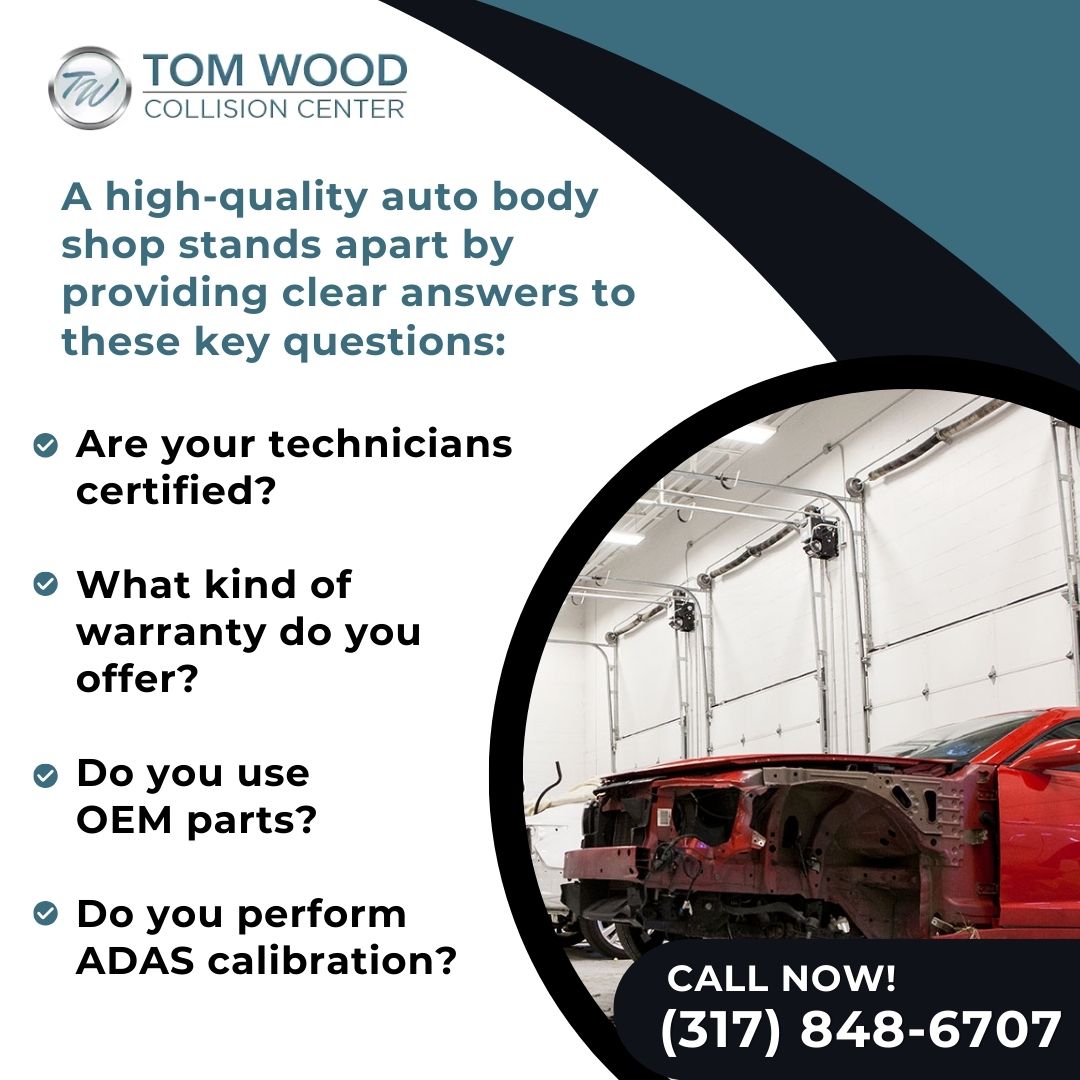
What Certifications Do Your Technicians Hold?
Technician certifications validate training, expertise, and commitment to professional standards. This question reveals whether the shop invests in ongoing education and maintains current repair knowledge. Look for these key certifications:
- I-CAR Gold Class - Annual training requirements across multiple repair specialties
- ASE Certification - Two years of experience plus rigorous examination requirements
- Manufacturer-Specific Training - Brand-authorized repair procedures and techniques
Request to see the current certification documents. Legitimate credentials include technician names, specialty areas, and expiration dates. Professional shops display these prominently and willingly share verification.
Which Vehicle Manufacturers Certify Your Facility?
Manufacturer certifications prove the shop can perform repairs according to factory specifications. This becomes critical for newer vehicles, luxury brands, and models with advanced materials.
Certified facilities maintain specialized equipment and procedures that generic shops cannot replicate. Electric vehicles, aluminum-bodied trucks, and advanced driver assistance systems demand manufacturer-specific knowledge that only authorized facilities possess.
Ask whether the shop holds certification for your specific vehicle brand. Tesla, BMW, and Mercedes-Benz maintain particularly strict requirements that separate professional facilities from basic repair operations.
What Type of Warranty Do You Provide on Repairs?
Warranty coverage demonstrates confidence in repair quality and protects your investment. Request written warranty documentation specifying coverage duration and included repairs. Key warranty questions to ask:
- What repairs does the warranty cover (labor, materials, paint)?
- How long does the coverage last?
- What situations void the warranty?
- Does coverage transfer if you sell the vehicle?
- Who handles warranty claims if problems arise?
Most warranties exclude subsequent accidents, environmental damage, and normal wear. Understanding these limitations prevents surprises if issues develop after repairs.
Will You Provide a Detailed Written Estimate Before Starting Work?
Written estimates create clear expectations and prevent unauthorized charges. Professional auto body shops provide detailed documentation listing all repair procedures, replacement parts, labor operations, and costs.
Ask how the shop handles additional damage discovered during repairs. Hidden issues often appear once technicians disassemble damaged areas. Understand the notification and approval process before authorizing work.
Request that the shop contact you before performing any work not included in the original estimate. This prevents unauthorized repairs exceeding your budget or insurance coverage.
Do You Use OEM Parts or Aftermarket Components?
Parts quality directly affects repair safety, appearance, and vehicle value. Understanding the difference helps you make informed decisions.
OEM (Original Equipment Manufacturer) Parts:
- Match exact factory specifications
- Undergo crash testing for safety
- Preserve manufacturer warranties
- Maintain resale value
Aftermarket Parts:
- Lower cost alternatives
- Variable quality standards
- May affect safety system function
- Potential fitment issues
Ask why the shop recommends specific parts. Insurance companies sometimes specify aftermarket components to reduce costs. You maintain the right to request OEM parts, though you may pay price differences.
How Long Will My Repairs Take to Complete?
Realistic timeline estimates help you plan alternative transportation. Repair duration depends on damage severity, parts availability, and shop workload. Typical timeframes include:
- Minor cosmetic repairs: 2-3 days
- Moderate collision damage: 1-2 weeks
- Extensive structural work: 2-3 weeks or longer
Ask about parts ordering and delivery timeframes. OEM components for common vehicles arrive within days, while specialty parts may require weeks. Insurance approval adds 3-5 days for straightforward repairs. Request regular progress updates throughout repairs. Professional shops communicate timeline changes immediately rather than waiting for customers to call.
How Do You Handle Insurance Claims and Communication?
Insurance claims assistance simplifies the repair authorization process. Ask whether the shop works directly with insurance companies on estimate submission, damage documentation, and supplement negotiations. Experienced facilities reduce your involvement by:
- Communicating directly with insurance adjusters
- Submitting required photographs and paperwork
- Negotiating supplements for hidden damage
- Explaining coverage and deductible details
Understand the shop's payment procedures. Some require an upfront payment that you later recover from insurance, while others handle direct billing. Clarifying financial arrangements prevents surprises at vehicle pickup.
What Equipment Do You Use for Structural and Frame Repairs?
Modern frame equipment delivers precision repairs that basic tools cannot achieve. Professional shops use computerized frame straightening systems with laser measurement technology, which verifies whether the dimensions match manufacturer specifications.
Ask to see the frame equipment during facility tours. Look for hydraulic pulling systems, laser measuring devices, and anchoring equipment in dedicated structural repair areas. Shops lacking proper equipment cannot safely repair collision damage affecting the vehicle structure.
Frame accuracy directly impacts vehicle safety, handling characteristics, and tire wear patterns. Professional facilities access manufacturer-specific measurement data for each vehicle model.
Will You Calibrate Advanced Safety Systems After Repairs?
Safety system calibration restores crash avoidance technology to proper operation. Modern vehicles use cameras and radar sensors to monitor road conditions and surrounding traffic. These systems require precise calibration following:
- Collision repairs
- Windshield replacement
- Any work affecting sensor positioning
Ask whether the shop owns calibration equipment specifically designed for your vehicle brand. Manufacturer-specific tools and procedures vary across different makes and models.
Understand calibration costs and insurance coverage. ADAS calibration represents separate charges beyond basic repairs. A professional auto body shop near you should include these costs in initial estimates rather than surprise customers at pickup.
Request verification that safety systems function properly before accepting your vehicle. Diagnostic scans should confirm all systems operate correctly with no warning lights active.
Making the Right Choice for Your Auto Body Repairs
The questions you ask before selecting an auto body shop near you determine repair quality, cost transparency, and overall satisfaction. Take time to interview multiple shops, comparing certifications, equipment capabilities, parts policies, and customer service approaches. The repair facility you select affects vehicle safety, restoration quality, and long-term value preservation.
Quality collision repair requires technical expertise, proper equipment, manufacturer-approved procedures, and genuine customer focus. Shops cutting corners on certifications, parts quality, or communication typically deliver substandard results regardless of advertised prices or convenient locations.
Expert Collision Repair from the Leading Auto Body Shop in Indianapolis
Tom Wood Collision operates as one of Indianapolis's most comprehensively certified collision facilities, providing factory-approved repairs across over 20 vehicle brands. Our manufacturer certifications include Porsche, Jaguar, Land Rover, Volvo, Lexus, Honda, Toyota, Ford, and many others serving the Indianapolis market.
Advanced Diagnostic and Repair Technology
We invest in the latest equipment that delivers precision results. Our facility features computerized frame straightening systems with laser measurement technology, advanced paint matching systems, and manufacturer-specific diagnostic equipment. This technology combination allows us to restore vehicles to exact factory specifications.
Transparent Insurance Claims Management
We maintain established relationships with all major insurance carriers, managing claims communication and documentation on your behalf. Our experience with insurance procedures reduces approval delays and helps authorize proper repairs without unnecessary complications.
Whether your insurance company recommends our facility or you select us independently, we work directly with adjusters to streamline the approval process. We handle estimate submissions, supplement negotiations, and payment coordination, reducing your administrative burden.
Commitment to Quality and Customer Service
At Tom Wood Collision, our systematic inspection processes verify that paint finish, panel fit, and safety systems meet professional standards before we consider repairs complete. We provide regular progress updates and responsive communication throughout the repair process.
We use OEM parts whenever possible to maintain vehicle integrity and safety standards. When aftermarket components make sense for your situation, we explain the differences clearly and help you make informed decisions, balancing cost and quality considerations.